Electric Three-Wheeler Battery Recycling
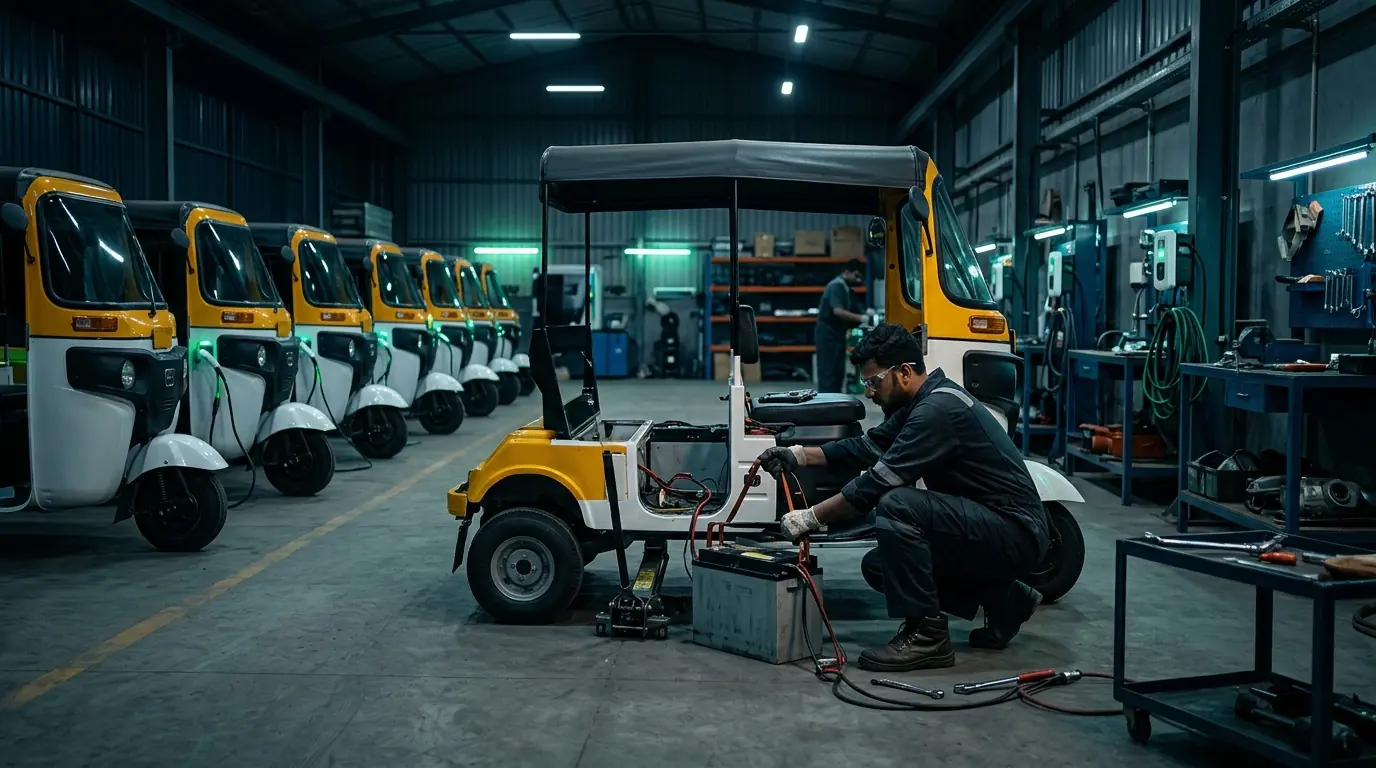
Milk-run collection, water-ingress checks and value recovery for high-cycle e-rickshaw, passenger auto and cargo three-wheeler packs.
Facilities
38
Annual capacity
735,500 TPA
Cities covered
117
Quote turnaround
48 hrs
What the programme covers
High-cycle fleet packs
Commercial three-wheelers cycle daily, so packs often retire with a wide spread of module health.
Water and corrosion checks
Under-seat and rear bays see water ingress; every pack is inspected before it is packaged.
Aftermarket and repaired packs
Packs repaired outside OEM channels are flagged, inspected and graded with extra caution.
Recurring milk runs
Depots and service points are scheduled on recurring routes rather than one-off collections.
Legacy chemistries
Older LMO blends are separated from newer LFP packs at intake.
Driver-owner programmes
Buy-back schemes let individual owners retire packs through dealers with a transparent value.
From declaration to certificate
- 1
Check the bay
Inspect for corrosion and water ingress; flag any repaired packs.
- 2
Remove and tape
Pull quick-connect plugs and tape terminals.
- 3
Group by chemistry
LFP, LMO and other chemistries are grouped before collection.
- 4
Collect on the route
Packs join a scheduled milk run to the nearest intake site.
At a glance
| Parameter | Detail |
|---|---|
| Typical pack | 5–13 kWh, 48–96 V |
| Handling | Small groups per pallet box |
| Common chemistries | LFP, LMO |
| Collection | Recurring milk runs |
Three-Wheeler packs we handle
Pack data, grading curves and recovery estimates for each model.
Frequently asked questions
Why do three-wheeler packs vary so much?
Heavy daily cycling, heat and uneven charging habits spread module health widely, which is why module-level grading pays off.
Do you take repaired or modified packs?
Yes, but declare them. They are inspected more closely and may be routed straight to refining.
Can small fleets join a milk run?
Yes. Depots with a few retirements a month are added to the nearest scheduled route.
Explore related services
From the resource library
Ready to move packs?
Share volumes, chemistry and condition. A binding quote with logistics and paperwork follows within 48 hours.