Damaged EV Battery Disposal & Emergency Collection
Specialist assessment, quarantine, overpack and collection for crashed, swollen, wet, recalled or thermally damaged EV batteries.
Facilities
38
Annual capacity
735,500 TPA
Cities covered
117
Quote turnaround
48 hrs
What the programme covers
Remote triage
Photographs, temperatures, voltage and event history set the response class.
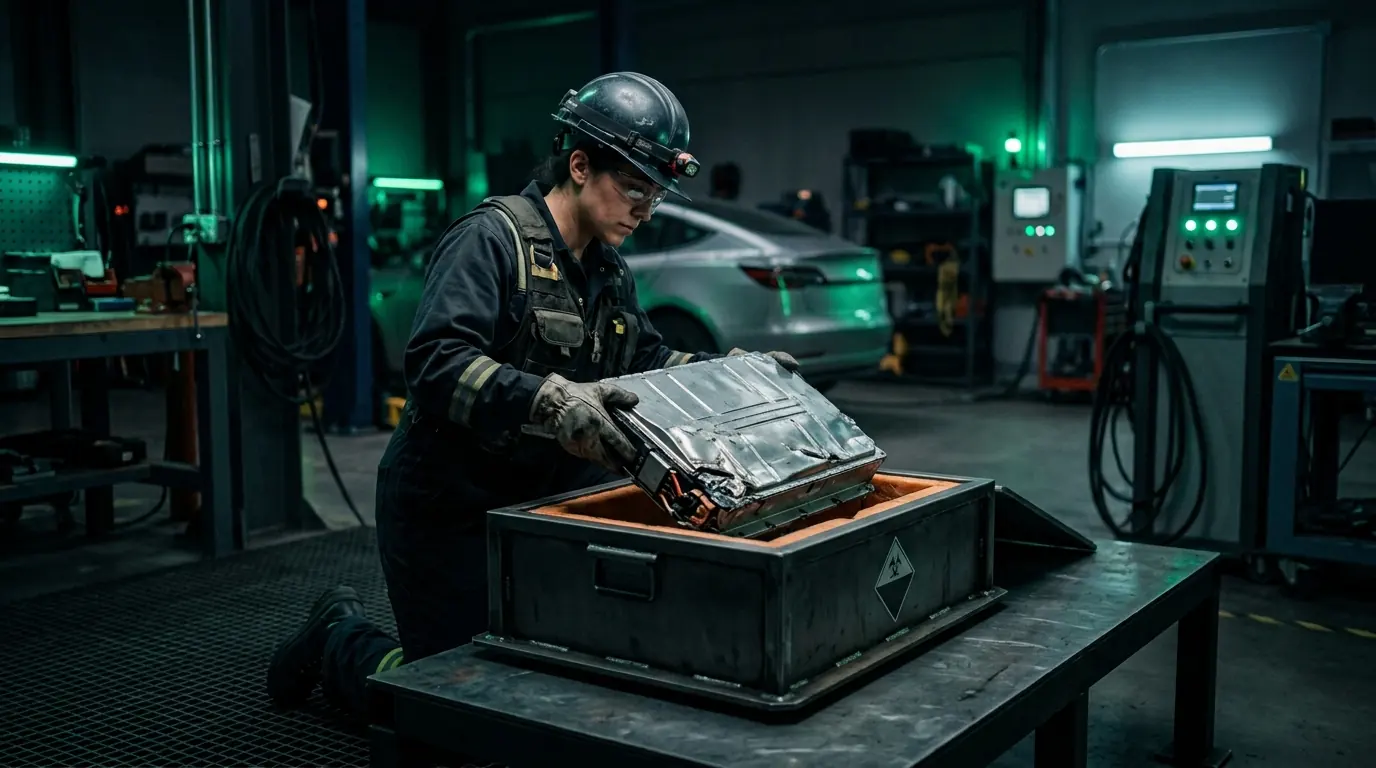
Immediate isolation
The pack is moved away from buildings and combustible inventory where safe.
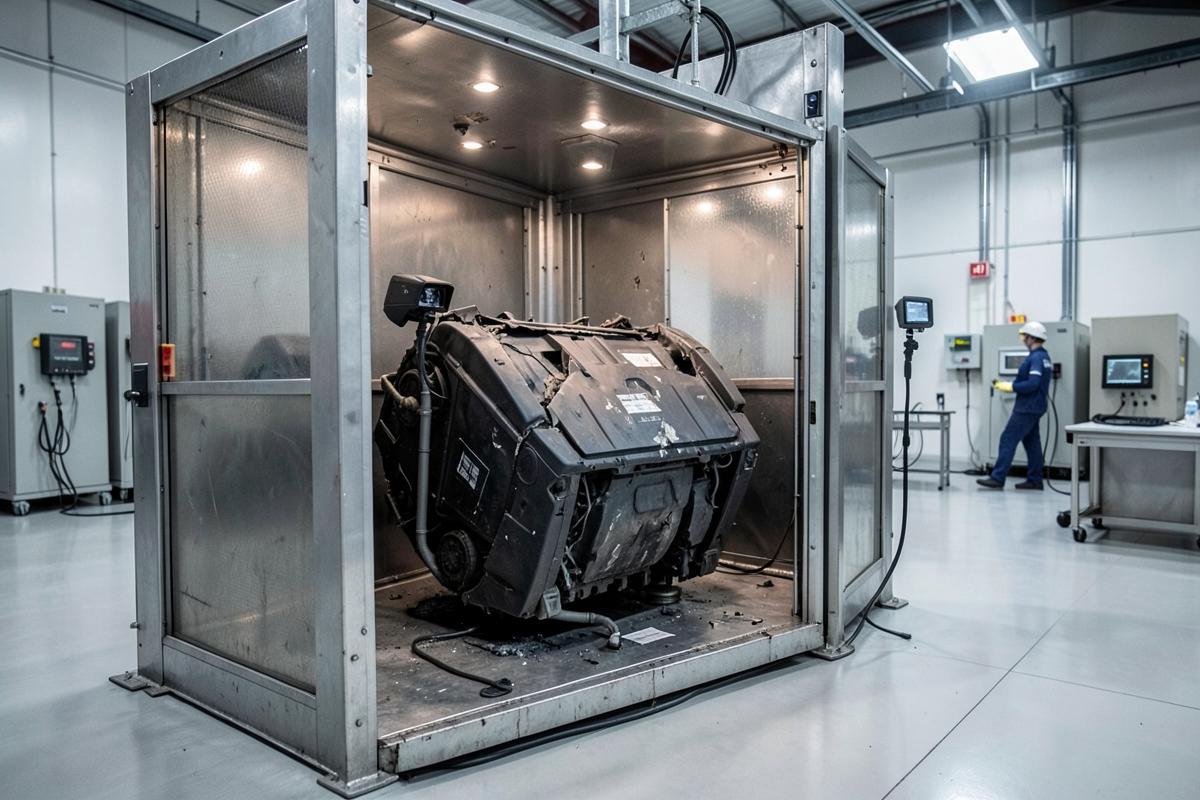
Thermal monitoring
Temperature trend and gas indicators determine whether transport is permitted.
Approved containment
Damaged-and-defective overpacks use fire-resistant lining and restraint.
Specialist transport
A trained crew follows a route and emergency response plan.
Controlled processing
The pack remains segregated through discharge and disassembly.
Infrastructure built for the complete battery lifecycle

From declaration to certificate
- 1
Declare
Share pack count, chemistry, state of charge, damage status and pickup constraints.
- 2
Collect
Certified crews package and transport each consignment with serial-level chain of custody.
- 3
Grade
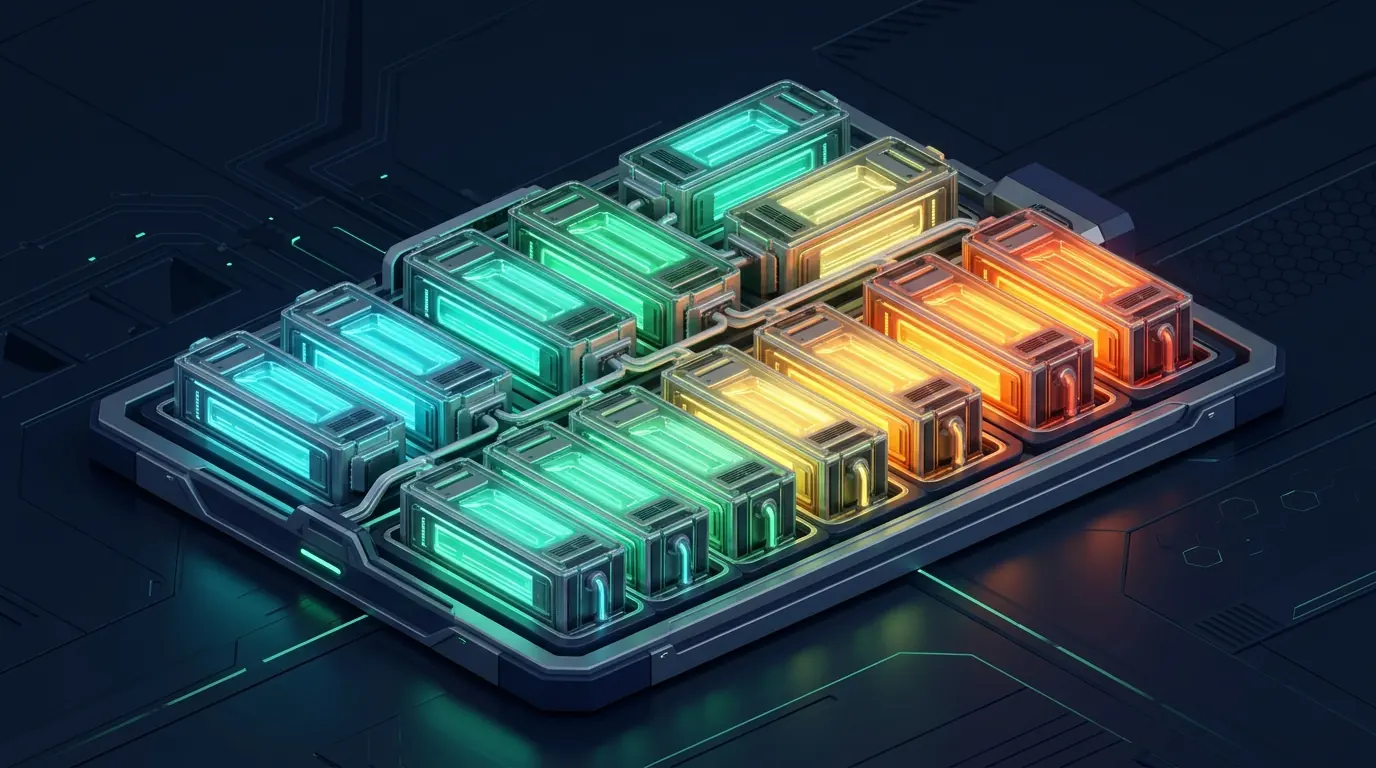
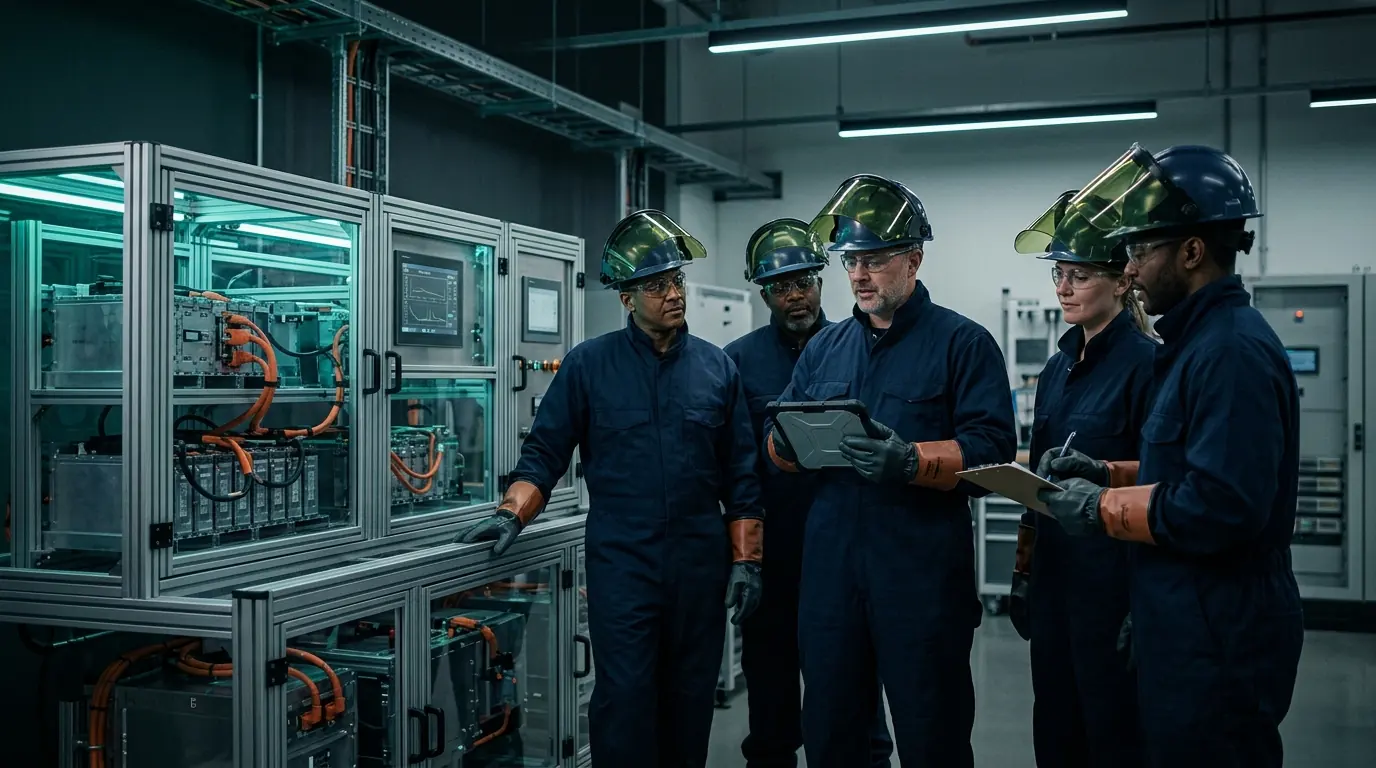
Capacity, resistance, thermal and impedance tests separate reusable modules from recycling feed.
- 4
Settle
Receive measured-value settlement, processing evidence and the applicable compliance certificate.
At a glance
| Parameter | Detail |
|---|---|
| Response | Priority assessment within two hours |
| Conditions | Crash, swelling, water, recall or thermal event |
| Containment | Damage-class specific steel overpack |
| Do not | Charge, open, move casually or place indoors |
Frequently asked questions
What should I do with a damaged EV battery?
Isolate the vehicle or pack from people and combustible material, do not charge or open it, monitor for heat or vapour, and contact a specialist battery response provider.
Can a damaged lithium battery be transported?
Only after a competent assessment and with packaging, documentation and carrier controls appropriate to its damage and thermal state.
Explore related services
Ready to move packs?
Share volumes, chemistry and condition. A binding quote with logistics and paperwork follows within 48 hours.