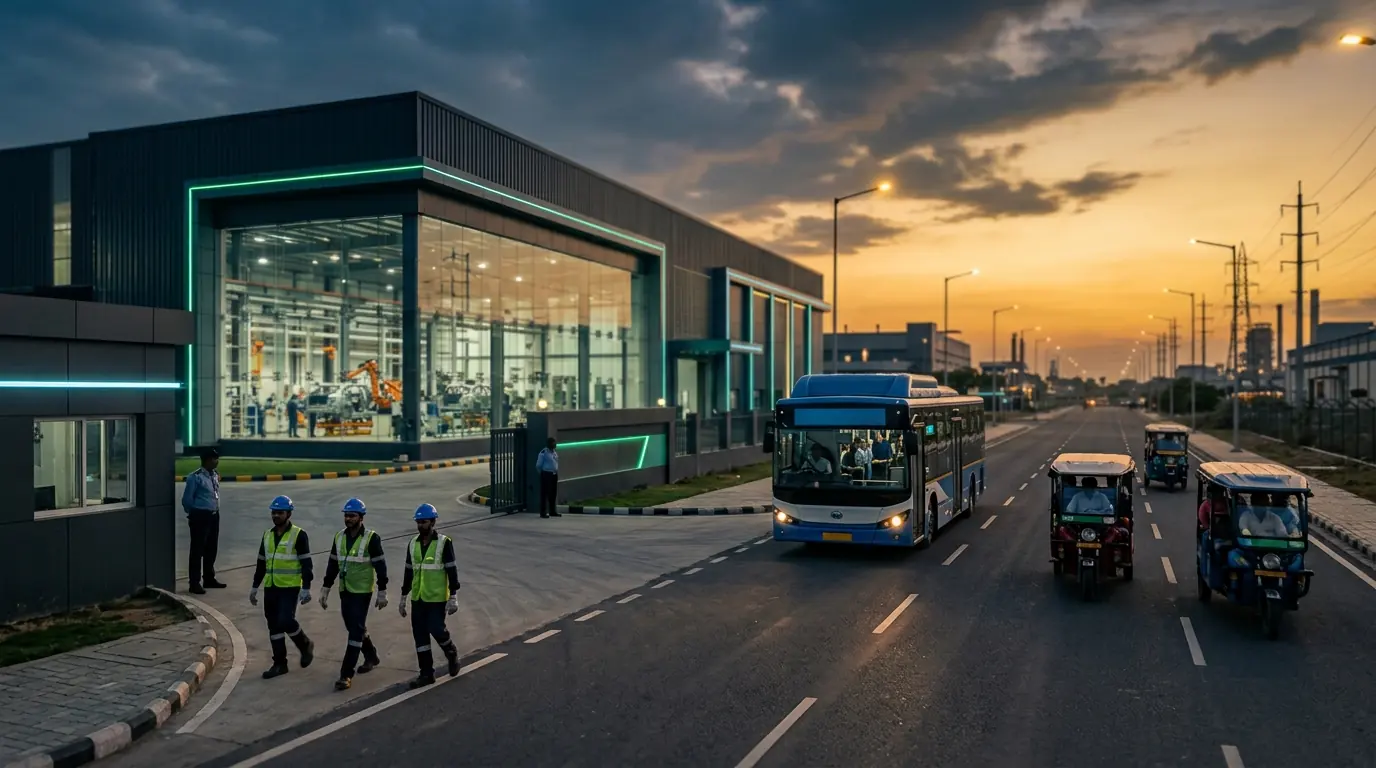
EV battery recycling in India
India commercial EV battery collection coverage spans 57 manufacturing clusters, OEM offices, metro zones and logistics gateways with traceable pickup and processing.
Covered locations
57
Serving facilities
18
Facility capacity
245,500 TPA
Commercial response
48 hrs
The battery end-of-life picture in India
India's EV market looks different from most. Electric two- and three-wheelers outsell electric cars many times over, so the end-of-life stream is dominated by small packs arriving in large numbers, often from dealers, swapping networks and last-mile fleets rather than from single large owners. LFP cells dominate new passenger and commercial vehicles, while earlier two-wheelers used NMC and LMO chemistries that are now reaching retirement.
Collection is the hardest part of the problem. Much of today's retired volume still flows through informal scrap dealers, where manual breaking destroys value and creates safety risks. The Battery Waste Management Rules 2022 are pulling that volume into the formal system, because producers need EPR certificates from registered recyclers to meet their targets.
Our Indian network covers the main manufacturing belts — NCR, Pune–Chakan, Chennai–Hosur, Sanand and Hyderabad — with collection yards feeding grading centres, second-life works and refineries in the east and south. The aim is to get packs from dealers and depots to a graded bench quickly, so reuse decisions are made on measured health, not guesswork.
What drives volume in India
Manufacturing belts
Vehicle and cell production clusters in NCR, Pune, Chennai–Hosur and Gujarat generate steady production scrap alongside end-of-life returns.
Two- and three-wheeler fleets
Delivery, ride-hailing and e-rickshaw operators retire packs in high-cycle batches, which suits scheduled milk-run collection.
National collection coverage
Eighteen facilities, from Gurugram to Guwahati and Kochi, cut the distance between a retired pack and a registered recycler.
Second-life demand
Telecom towers, rooftop solar and rural microgrids offer a large market for graded LFP modules at modest cycling duty.
What the rules require in India
BWMR 2022 and the CPCB portal
Producers must register on the CPCB centralised EPR portal and meet collection targets with certificates from registered recyclers. Annual returns and certificate trading all run through the portal.
State consents
Every storage and processing site needs consent to establish and operate from its State Pollution Control Board. Buyers should check that a recycler's consents cover lithium-ion processing specifically.
Recovery and recycled content
The rules set rising minimum recovery levels for battery materials and phase in the use of domestically recycled content. Producers should plan offtake and certificate strategies several years ahead.
Sites serving India
Manufacturing and collection locations
India: common questions
Can a two-wheeler dealer hand batteries to you directly?
Yes. Dealers and service centres can book collections, and we aggregate small quantities through scheduled routes so the per-pack cost stays low.
Do your certificates count towards CPCB EPR targets?
Certificates are issued through the CPCB portal for the quantities processed at our registered facilities, in the form producers need for their annual EPR filings.
Which Indian regions do you cover?
Our facilities serve the north, west, south and east, including the North-East through our Guwahati yard, with collection routes planned from the nearest site.
Collecting in India?
Tell us where the packs are and we route them to the nearest site with the right paperwork for the jurisdiction.