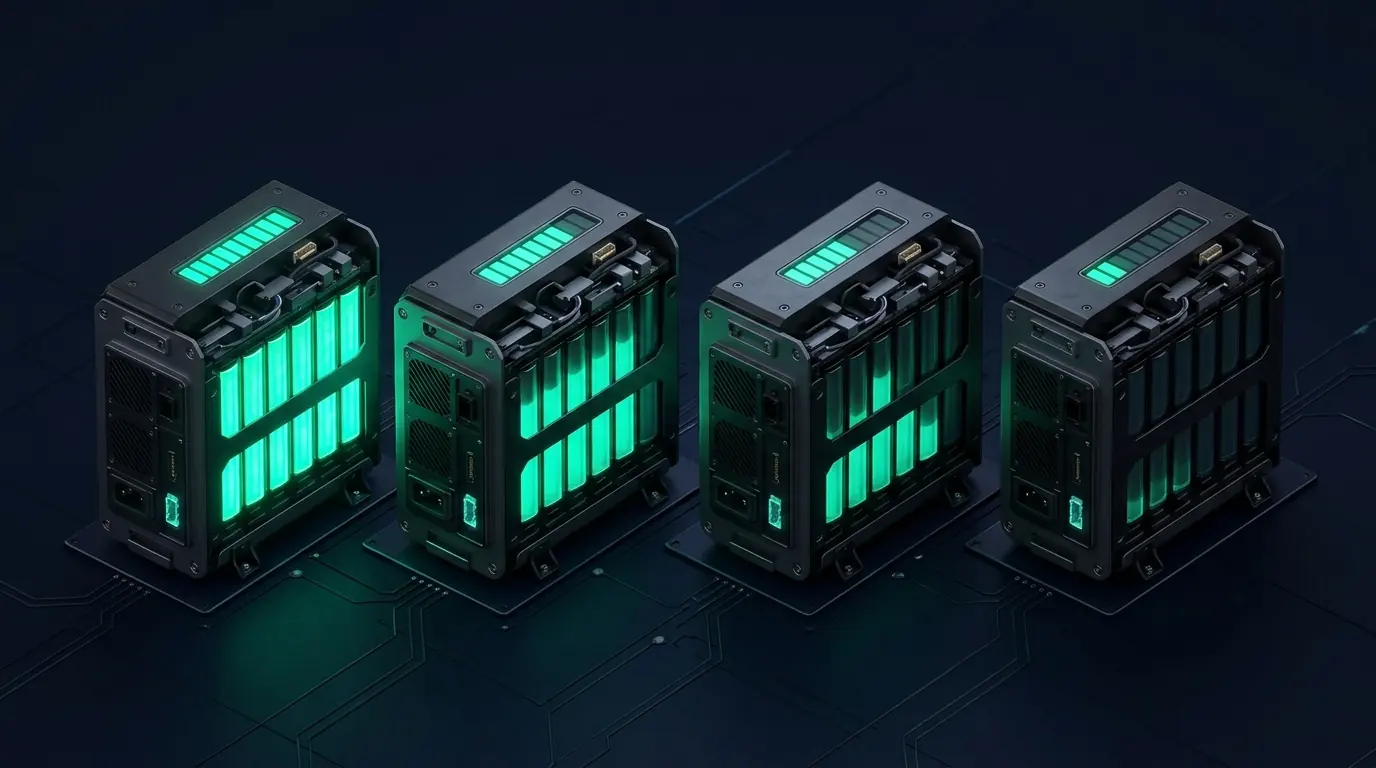
From grade to application
Each grade has a clear destination. Grade A modules, at 85% SOH and above with clean diagnostics, go into grid-tied or commercial storage where they will cycle regularly. Grade B modules, between 75% and 85%, suit telecom backup and solar buffering. Grade C modules, between 65% and 75%, are used for cell harvesting or low-duty backup with shorter warranties.
Grade D covers anything below 65% or with any safety concern. Those modules are discharged and sent for refining, because the risk and the limited remaining capacity outweigh any reuse value.
| Grade | Measured SOH | Typical destination |
|---|---|---|
| A | 85% and above | Grid-tied and commercial storage |
| B | 75–85% | Telecom backup, solar buffering |
| C | 65–75% | Cell harvest, low-duty backup |
| D | Below 65% or safety flag | Discharge and refining |
Why binning and matching matter
Modules in a series string share the same current, so the weakest one sets the limit for the whole string. If capacity and resistance vary widely, the string loses usable energy and the weakest module is overstressed, which accelerates its decline. Tight bins keep modules working within the same envelope.
Matched sets also simplify balancing. The battery management system spends less energy correcting imbalances, and the string reaches end of life more evenly, which makes warranty terms easier to set and honour.
- Group by capacity and by resistance, not capacity alone
- Keep chemistry and format consistent within a string
- Record bin data per module for warranty tracking
- Retest stored modules before dispatch
Field note