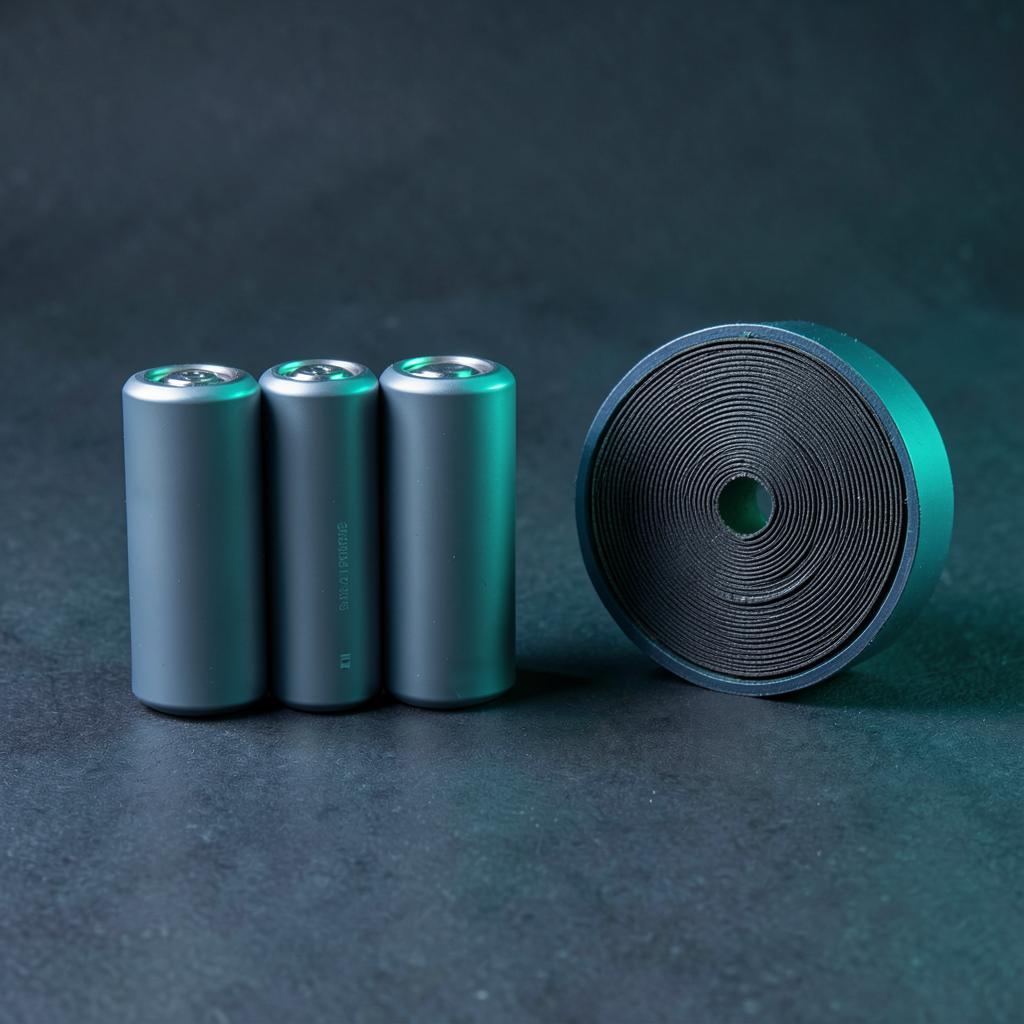
NMC 811 Cylindrical 2170 recycling
High-nickel cylindrical cells with the strongest hydrometallurgical recovery credit per tonne of black mass.
Energy density
260 Wh/kg
Rated cycle life
2,000
Manufacturer nominal
Black mass value
6.4 $/kg
Per kg pack mass
Second-life value
74 $/kWh
At 100% SOH
What a tonne of black mass contains
| Element | kg / 100 kg | kg / tonne | Recovery |
|---|---|---|---|
| Lithium | 3.5 | 35 | 91% |
| Nickel | 22.6 | 226 | 98% |
| Cobalt | 2.8 | 28 | 98% |
| Manganese | 2.6 | 26 | 98% |
| Copper | 11.2 | 112 | 98% |
| Aluminium | 9.4 | 94 | 98% |
Refiners pay for nickel and cobalt content, so black mass assay accuracy and aluminium or copper carry-over from the shredding stage directly move the settlement.
Reference case
How NMC 811 (2170) behaves at end of life
Ageing and fade
NMC 811 loses capacity through a mix of SEI growth, cathode surface reconstruction and micro-cracking of nickel-rich particles. Resistance climbs faster than in LFP, which matters as much as capacity for second-life duty.
The knee point
Fade is gradual through most of vehicle life, but high-nickel cells can reach a knee earlier if they were fast-charged heavily or held at high state of charge in heat. Module-level testing catches cells that are close to it.
Thermal behaviour
High-nickel NMC cathodes release oxygen as they decompose, so once runaway starts it is fast and energetic. Cylindrical 2170 cells vent through a designed rupture point, which helps, but cell-to-cell propagation inside a tightly packed module is the main hazard.
Disassembly
Cells are usually glued into carriers with wire-bonded interconnects, so module harvesting is realistic but individual cell recovery is slow. Most value comes from grading whole modules.
Where it works after the vehicle
Good — grade-A modules above 80% SOH qualify for commercial-scale BESS strings.
- Commercial and industrial peak shaving
- Short-duration backup
- Residential storage with conservative limits
Limits
Packaging and transport
Cylindrical modules are dense and often liquid-cooled: drain and cap coolant lines, check for coolant ingress, and keep modules below 30% state of charge for storage and transport.
- Below 30% state of charge, recorded per serial
- Terminals capped, service disconnect removed
- UN-approved packaging with non-conductive cushioning
- Damage status declared before pickup
NMC 811 (2170) guides
EV models using NMC 811 (2170)
NMC 811 (2170): common questions
Is NMC 811 (2170) worth recycling?
Yes. At current settings a NMC 811 (2170) pack credits about USD 6.4 per kg as black mass, and grade A modules are worth around USD 74 per kWh in second life.
How does NMC 811 (2170) age?
NMC 811 loses capacity through a mix of SEI growth, cathode surface reconstruction and micro-cracking of nickel-rich particles. Resistance climbs faster than in LFP, which matters as much as capacity for second-life duty. Fade is gradual through most of vehicle life, but high-nickel cells can reach a knee earlier if they were fast-charged heavily or held at high state of charge in heat. Module-level testing catches cells that are close to it.
Is NMC 811 (2170) safe to transport?
It moves as Class 9 dangerous goods under UN 3480 / UN 3481. Cylindrical modules are dense and often liquid-cooled: drain and cap coolant lines, check for coolant ingress, and keep modules below 30% state of charge for storage and transport.
Where does NMC 811 (2170) work in second life?
Good — grade-A modules above 80% SOH qualify for commercial-scale BESS strings. Typical applications: commercial and industrial peak shaving, short-duration backup, residential storage with conservative limits.
Retiring NMC 811 (2170) packs?
Share pack counts and condition for a graded value split and a collection window within 48 hours.