Inputs and outputs
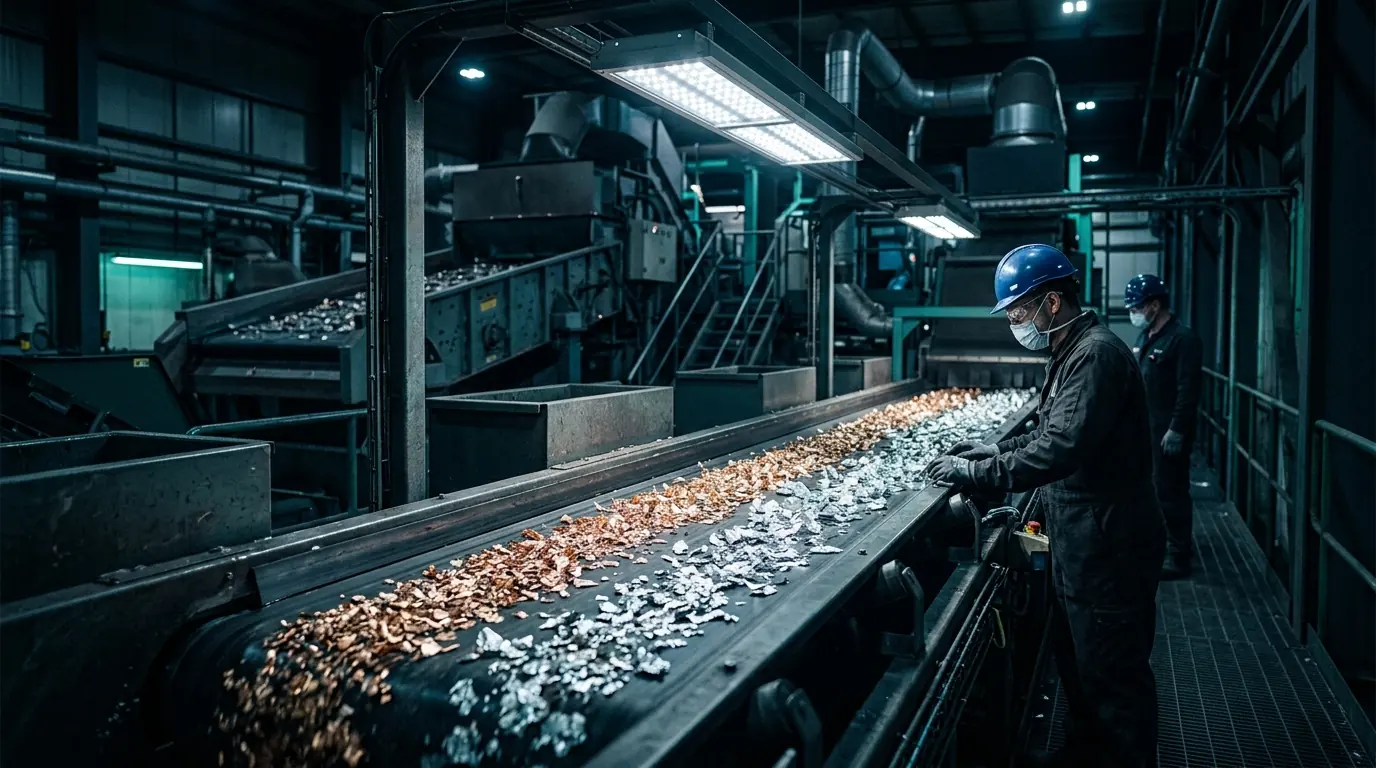
A hydrometallurgical plant dissolves black mass in acid, commonly sulphuric acid with a reducing agent, then uses bases such as sodium hydroxide to adjust pH and precipitate products. Solvent extraction circuits separate the metals, and crystallisation produces battery-grade salts. Each step consumes reagents, water and energy.
The main liquid stream after metal recovery is a salt-rich solution, often dominated by sodium sulphate. Other residues include leach residue containing graphite, precipitated impurities such as iron and aluminium compounds, and small volumes of spent organic solvents. Managing these streams responsibly is central to the plant's environmental performance.
Water and effluent management
Plants can recycle much of their process water by recovering it from evaporation and crystallisation stages. Zero-liquid-discharge designs go further, crystallising dissolved salts so that no process effluent leaves the site, at the cost of additional energy. Where discharge is permitted, effluent must meet local limits for metals, pH, sulphate and other parameters.
Sodium sulphate can be crystallised and sold to industries such as detergents or glass, but markets vary by region and quality requirements. Some processes reduce sodium sulphate generation by using alternative reagents or recovering acid, which improves both economics and environmental performance.
- Recover and reuse process water
- Crystallise sodium sulphate for sale where possible
- Monitor effluent against permit limits
- Treat and dispose of residues through licensed routes
Air emissions and monitoring
Air emissions come from several sources: acid mists during leaching, volatile organic compounds from solvent extraction, dust from handling black mass and emissions from any thermal pre-treatment. Fluorine compounds from electrolyte residues need particular attention because of their toxicity. Scrubbers, dust collectors and enclosed handling systems are used to control them.
Continuous and periodic monitoring demonstrates compliance with permits and builds trust with neighbours and regulators. Publishing environmental performance data, including water use per tonne processed and effluent quality, is increasingly expected by customers who need to verify the footprint of recycled materials.
| Stream | Main concern | Typical control |
|---|---|---|
| Process water | Freshwater demand | Recycling, evaporation recovery |
| Salt-rich effluent | Sulphate and metals | Crystallisation or treatment |
| Leach residue | Metal traces, graphite | Washing, licensed disposal or recovery |
| Off-gases | Acid mist, VOCs, fluorine | Scrubbers and enclosed systems |
Field note