How each route works
Pyrometallurgy treats batteries at high temperature in a furnace. Organic materials and graphite burn off and provide some of the energy, while nickel, cobalt and copper are reduced into a metal alloy. Aluminium, manganese and lithium mostly report to the slag. The alloy is then refined further, typically by hydrometallurgical steps, to produce individual metal compounds.
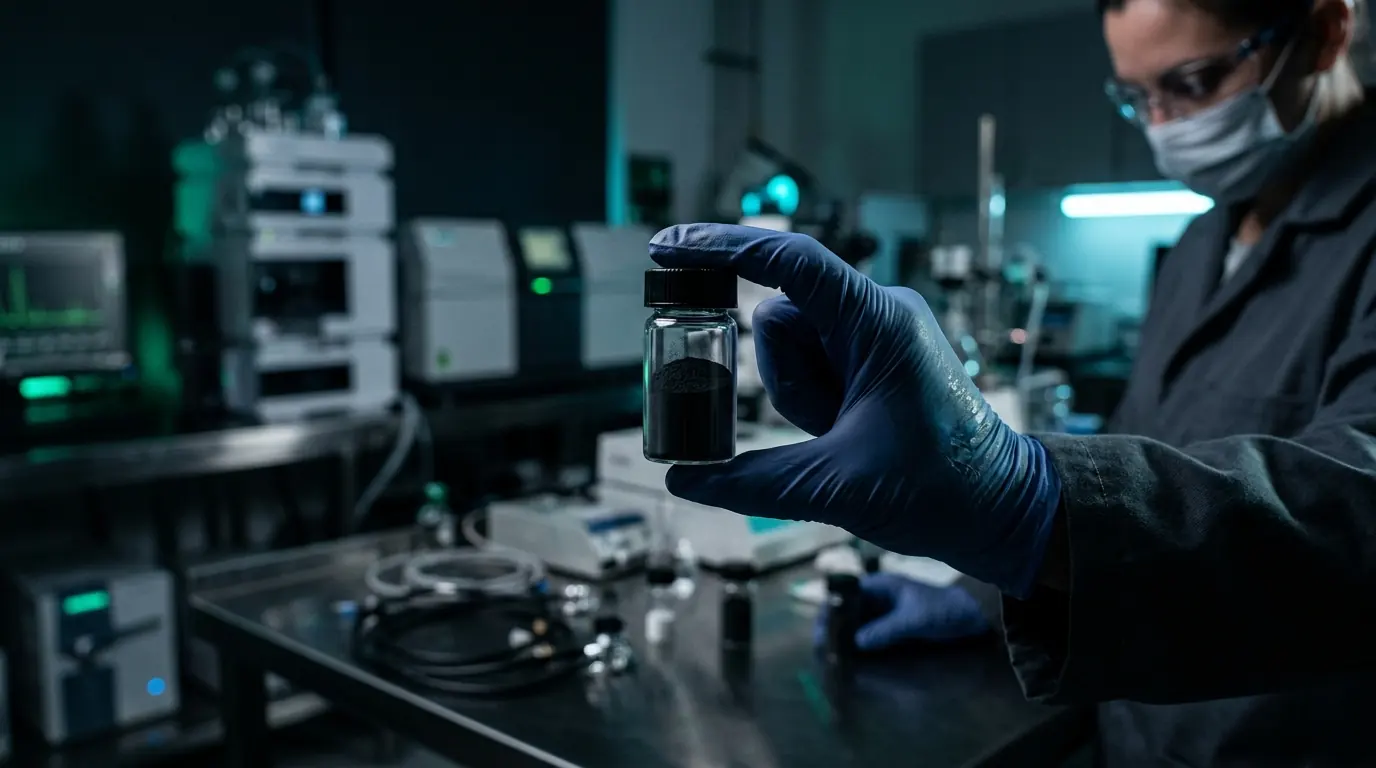
Hydrometallurgy starts from black mass rather than whole cells. The powder is leached in acid, commonly sulphuric acid with a reducing agent, to dissolve the cathode metals. Impurities such as iron, aluminium and copper are removed, and the individual metals are separated by solvent extraction or precipitation before being crystallised as sulphates, carbonates or hydroxides suitable for cathode production.
Recovery compared
The biggest difference is lithium. In a conventional smelter, lithium goes to slag and recovering it afterwards is possible but often uneconomic. A hydrometallurgical refinery can typically recover the majority of the lithium in the feed, along with high recoveries of nickel and cobalt. Manganese, which pyrometallurgy usually loses, can also be recovered in a hydro flowsheet.
Pyrometallurgy has real advantages: it accepts mixed and poorly sorted feed, it is proven at large scale and it destroys organics and fluorinated compounds in the furnace. Its drawbacks are energy use, emissions that require extensive gas cleaning, and the loss of lithium, aluminium and graphite. Hydrometallurgy consumes reagents and water and produces effluent that must be treated, but it operates at lower temperature and recovers a wider set of materials.
| Factor | Pyrometallurgy | Hydrometallurgy |
|---|---|---|
| Lithium recovery | Low without extra slag processing | Typically high |
| Nickel and cobalt | High, as alloy | High, as separate salts |
| Feed flexibility | Tolerates mixed feed | Needs pre-treated black mass |
| Main environmental burden | Energy and off-gas | Reagents, water and effluent |
| Graphite | Consumed as fuel/reductant | Recoverable as residue |
Choosing a route for your material
For most holders, the choice is made by the recycler rather than the producer, but it is worth asking which route your packs will take. If recovered-content claims matter, particularly under the EU Battery Regulation, which sets material-specific recovery targets for lithium as well as cobalt, nickel and copper, a route that recovers lithium supports those obligations more directly.
Where packs are mixed, damaged or contaminated, a thermal step can still be the pragmatic choice. The strongest outcome usually comes from segregation at source: keeping chemistries apart, grading modules for reuse first and sending only genuine end-of-life material to refining. That approach lets the recycler use hydrometallurgy for the bulk of the feed and reserve thermal treatment for material that needs it.
Field note