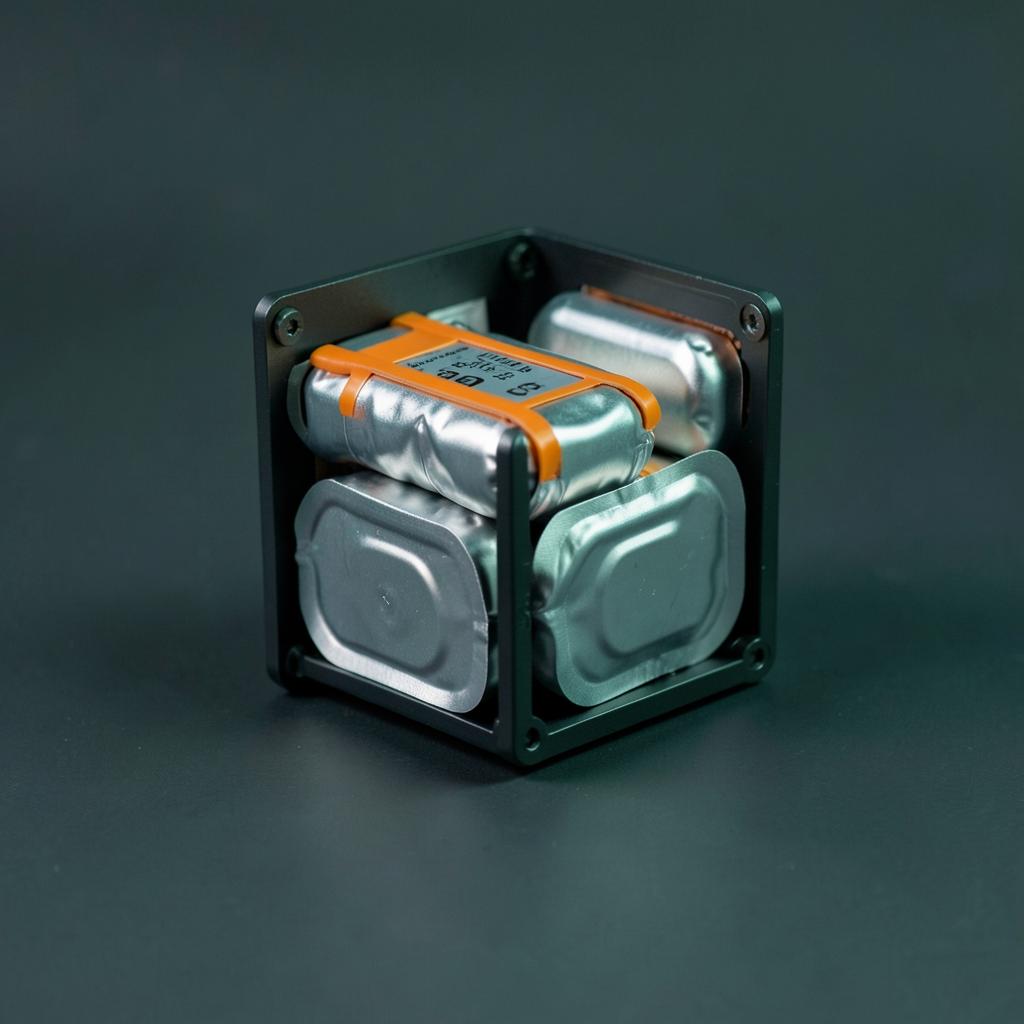
LMO / LMO-NMC Pouch recycling
Legacy manganese-rich pouch packs common in early two- and three-wheeler fleets across South Asia.
Energy density
145 Wh/kg
Rated cycle life
1,200
Manufacturer nominal
Black mass value
3.2 $/kg
Per kg pack mass
Second-life value
41 $/kWh
At 100% SOH
What a tonne of black mass contains
| Element | kg / 100 kg | kg / tonne | Recovery |
|---|---|---|---|
| Lithium | 3 | 30 | 91% |
| Nickel | 6.4 | 64 | 98% |
| Cobalt | 0.9 | 9 | 98% |
| Manganese | 18.7 | 187 | 98% |
| Copper | 11.8 | 118 | 98% |
| Aluminium | 13.2 | 132 | 98% |
Manganese-rich black mass carries less nickel and cobalt, so realised value depends on lithium recovery, manganese handling and clean copper and aluminium separation.
Reference case
How LMO Pouch behaves at end of life
Ageing and fade
LMO's weak point is manganese dissolution, which speeds up at elevated temperature and damages the anode. Packs that lived in hot climates without active cooling typically fade faster.
The knee point
Fade often accelerates earlier than in LFP, which is why second-life warranties on LMO blends are kept short and conservative.
Thermal behaviour
Manganese spinel is more thermally stable than nickel-rich cathodes, but blended LMO-NMC pouch cells still vent flammable gas when abused, and older packs may have weaker protection electronics.
Disassembly
Older modules are often mechanically simple, which helps, but inconsistent aftermarket repairs mean every pack is inspected before it is opened.
Where it works after the vehicle
Limited — accelerated manganese dissolution caps second-life warranty terms at 36 months.
- Light-duty backup in temperate conditions
- Low-cost, short-warranty storage
Limits
Packaging and transport
Many LMO packs come from early two- and three-wheelers and informal service channels. Expect missing documentation, check for prior repair and quarantine anything with swelling or corrosion.
- Below 30% state of charge, recorded per serial
- Terminals capped, service disconnect removed
- UN-approved packaging with non-conductive cushioning
- Damage status declared before pickup
LMO Pouch guides
EV models using LMO Pouch
LMO Pouch: common questions
Is LMO Pouch worth recycling?
Yes. At current settings a LMO Pouch pack credits about USD 3.2 per kg as black mass, and grade A modules are worth around USD 41 per kWh in second life.
How does LMO Pouch age?
LMO's weak point is manganese dissolution, which speeds up at elevated temperature and damages the anode. Packs that lived in hot climates without active cooling typically fade faster. Fade often accelerates earlier than in LFP, which is why second-life warranties on LMO blends are kept short and conservative.
Is LMO Pouch safe to transport?
It moves as Class 9 dangerous goods under UN 3480 / UN 3481. Many LMO packs come from early two- and three-wheelers and informal service channels. Expect missing documentation, check for prior repair and quarantine anything with swelling or corrosion.
Where does LMO Pouch work in second life?
Limited — accelerated manganese dissolution caps second-life warranty terms at 36 months. Typical applications: light-duty backup in temperate conditions, low-cost, short-warranty storage.
Retiring LMO Pouch packs?
Share pack counts and condition for a graded value split and a collection window within 48 hours.