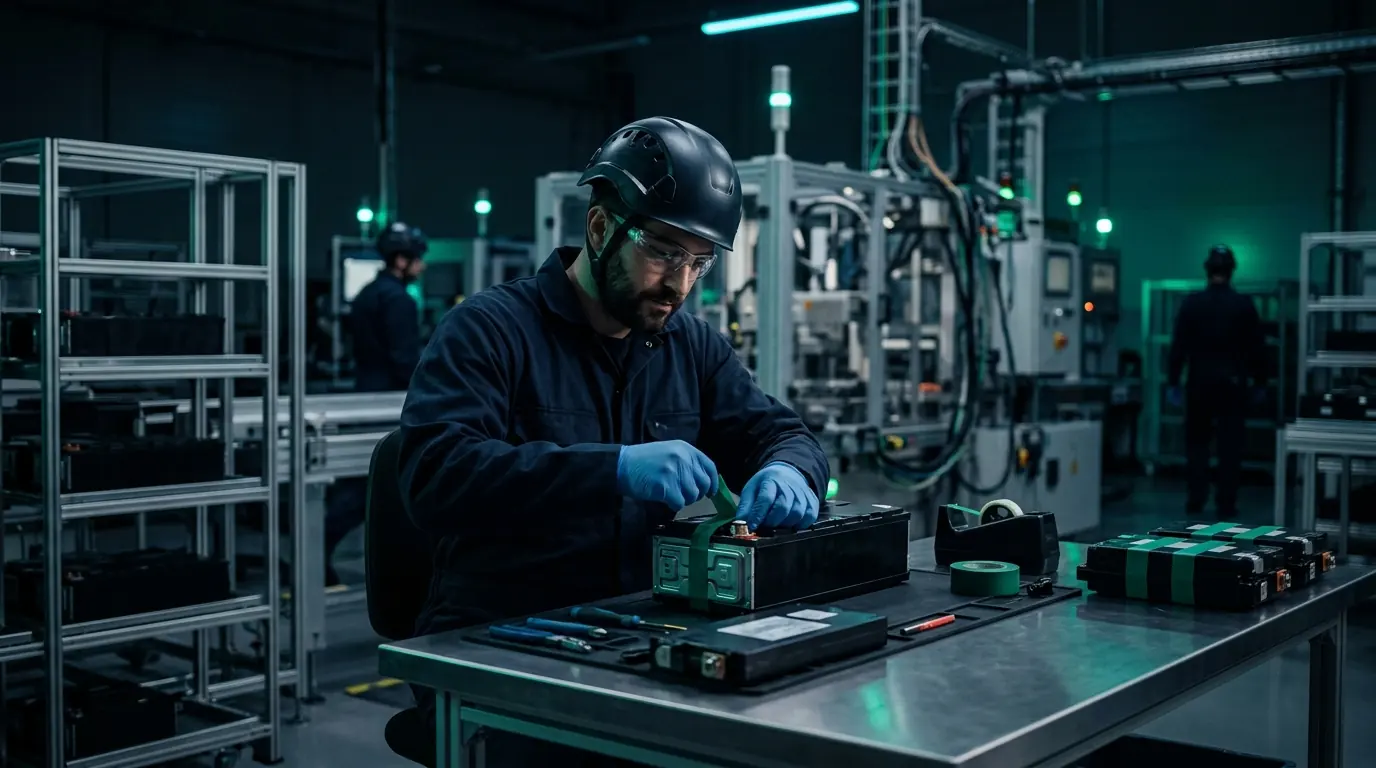
Thermal behaviour of LMO Pouch
Manganese spinel is more thermally stable than nickel-rich cathodes, but blended LMO-NMC pouch cells still vent flammable gas when abused, and older packs may have weaker protection electronics.
Whatever the chemistry, heat, mechanical damage and overcharge are the three triggers to control. Storage areas need detection, separation and a clear response plan.
Packaging and transport checklist
Many LMO packs come from early two- and three-wheelers and informal service channels. Expect missing documentation, check for prior repair and quarantine anything with swelling or corrosion.
- State of charge below 30%, recorded per serial
- Terminals taped or capped; service disconnect removed
- UN-approved packaging with non-conductive cushioning
- Class 9 marks, UN number and emergency contact on every package
- Damage status declared on the manifest before pickup
Disassembly considerations
Older modules are often mechanically simple, which helps, but inconsistent aftermarket repairs mean every pack is inspected before it is opened.
Every disassembly step starts with verified isolation and insulated tooling. If a module cannot be opened safely, it is discharged and routed to shredding instead.
Field note