What happens in thermal runaway
Thermal runaway begins when heat generated inside a cell exceeds the heat it can shed. Rising temperature triggers decomposition reactions in the electrolyte, electrodes and separator, which release more heat and accelerate the process. Once underway, the reaction is self-sustaining and the cell can vent flammable and toxic gases, catch fire or rupture.
In a module or pack, heat from one failing cell can drive neighbouring cells into runaway, a process known as propagation. Chemistry matters: nickel-rich cathodes generally release more energy and do so at lower temperatures than LFP, although LFP cells can still vent and burn. Retired batteries with unknown histories deserve particular caution.
Prevention
Most thermal runaway events trace back to a small number of causes: mechanical damage, overcharging, overheating, external short circuits and internal defects. Preventing them in a retired-battery setting means handling packs carefully, keeping terminals protected, storing batteries at reduced state of charge, controlling ambient temperature and inspecting incoming stock before it enters general storage.
Procedures matter as much as equipment. Staff should know how to recognise warning signs, damaged units should be quarantined immediately, and batteries should never be charged or tested outside controlled areas. Regular housekeeping, such as removing combustible packaging from storage areas, reduces the fuel available if an event does occur.
- Store below 30% state of charge where practical
- Protect terminals and prevent short circuits
- Keep storage areas cool and free of combustibles
- Quarantine anything swollen, leaking or hot
Detection
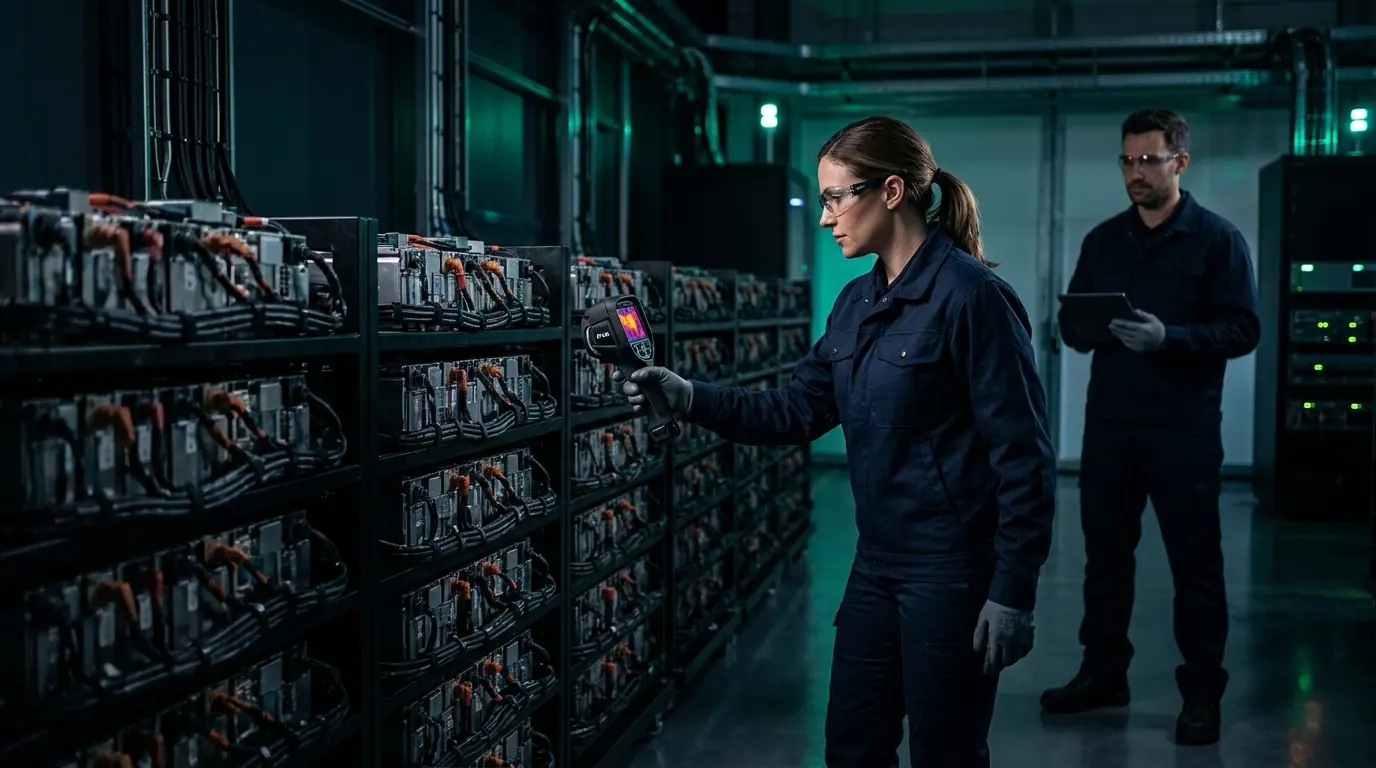
Before a cell ignites, it typically vents electrolyte vapours and gases such as hydrogen and carbon monoxide. Off-gas detectors positioned appropriately can identify that stage and trigger alarms, ventilation or shutdown before flames appear. Thermal imaging and temperature sensors add another layer by spotting abnormal heating in stored packs.
Smoke detection remains important but usually responds later. A layered approach, combining off-gas, heat and smoke detection with regular manual checks, gives the best chance of intervening early. Detection systems should be tested and maintained like any other safety-critical equipment.
| Method | What it detects | Timing |
|---|---|---|
| Off-gas sensors | Electrolyte vapour, hydrogen, CO | Early |
| Thermal imaging | Abnormal surface heating | Early to intermediate |
| Heat detectors | Rising air temperature | Intermediate |
| Smoke detectors | Combustion products | Later |
Responding to an event
Battery fires are difficult to extinguish because the reaction supplies its own heat and oxygen-bearing compounds. Fire services generally prioritise cooling to stop propagation, which can require large volumes of water over an extended period. Toxic gases, including hydrogen fluoride, mean responders need appropriate protection and the area should be evacuated and ventilated.
After an event, batteries can re-ignite hours or days later. Affected units should be moved, when safe, to an isolated area or immersion container and monitored. Sites should agree response plans with their local fire service in advance and ensure responders know where batteries are stored and how to isolate power.
Field note