Before booking
Start by listing exactly what you hold: pack models, quantities, approximate weights, chemistry and condition. Note any units with damage, swelling, leaks or a history of overheating, and photograph them. This information lets the collection team plan packaging, vehicles and paperwork correctly, and it is what allows a binding quote to be issued within 48 hours rather than after a site visit or a round of follow-up questions.
Then check site access. The collection vehicle needs a safe route, a suitable loading area and appropriate handling equipment, such as a forklift or pallet truck with enough capacity for the heaviest pack. Record any height or weight restrictions, permitted access times and site induction requirements for drivers, so that nothing delays loading on the day and the vehicle is not turned away at the gate.
- Pack models, counts, weights and chemistry
- Damage declarations with photographs
- Loading area, equipment and access times
- Site induction requirements for drivers
Preparing the batteries
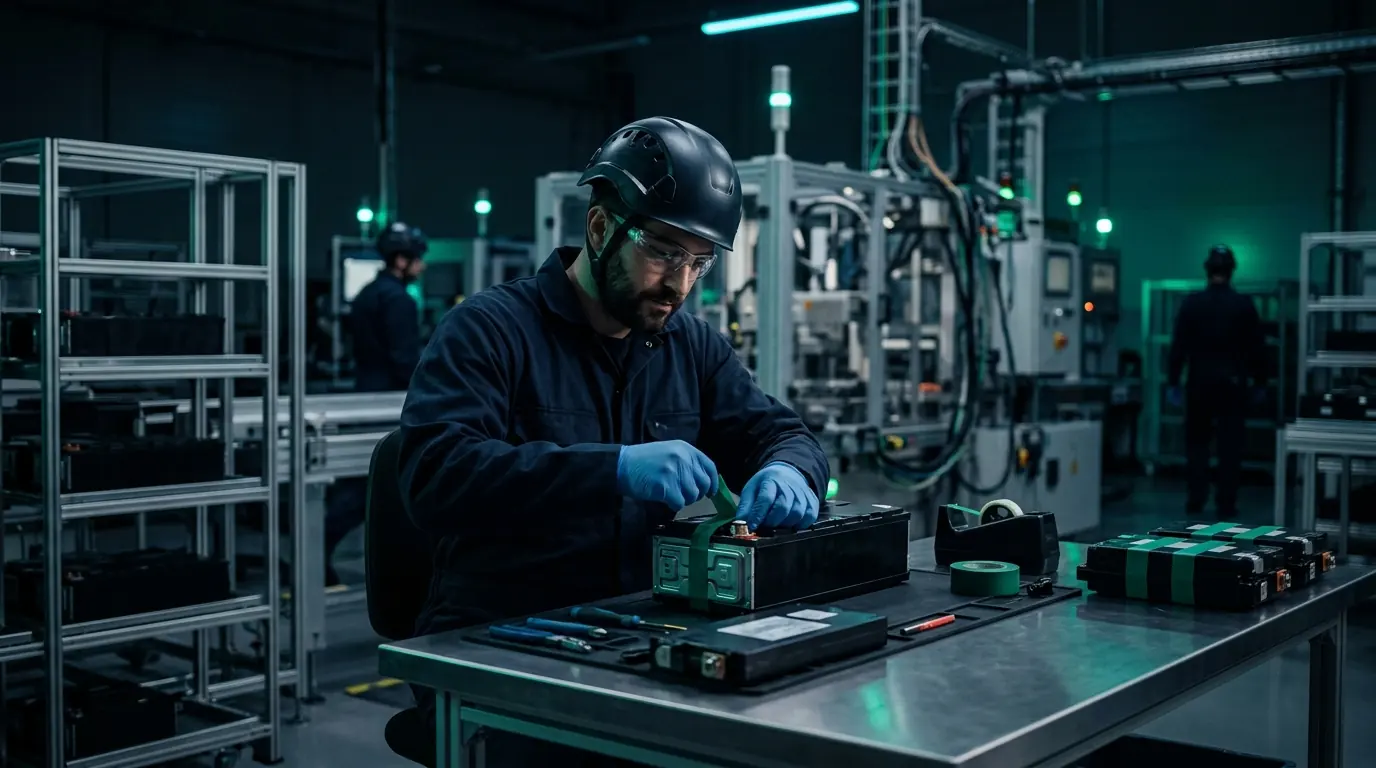
Packs should be stored and presented below 30% state of charge where practical, with terminals protected against short circuit and connectors covered or capped. Place them on suitable pallets, strap them securely and keep them in a dry, ventilated area away from heat sources, charging equipment and flammable materials. Good preparation reduces risk during storage as well as during loading and transport.
Label each pack or pallet with its identifier and condition so that it can be matched to the manifest quickly. Damaged or defective units should be held separately in a quarantine area and never mixed with healthy stock. They normally require specific packaging and transport arrangements, and the collection team must be told about them when the collection is booked, not when the driver arrives.
Field note
On the day of collection
Have a named contact available to meet the driver, walk the consignment against the manifest and sign the transfer documents. The driver will check packaging, labelling and declarations before loading anything. If something does not match, such as an extra pack or a label in the wrong place, it is far better to resolve it on site than to ship an incorrectly documented load and deal with the consequences later.
After collection, keep copies of the transport documents and the signed manifest in a single file. These form the first links in the chain of custody that ends with the recovery certificate. Most sites find that a well-prepared first collection establishes a routine, and that later collections then take a fraction of the time because storage, labelling and paperwork are already in place.