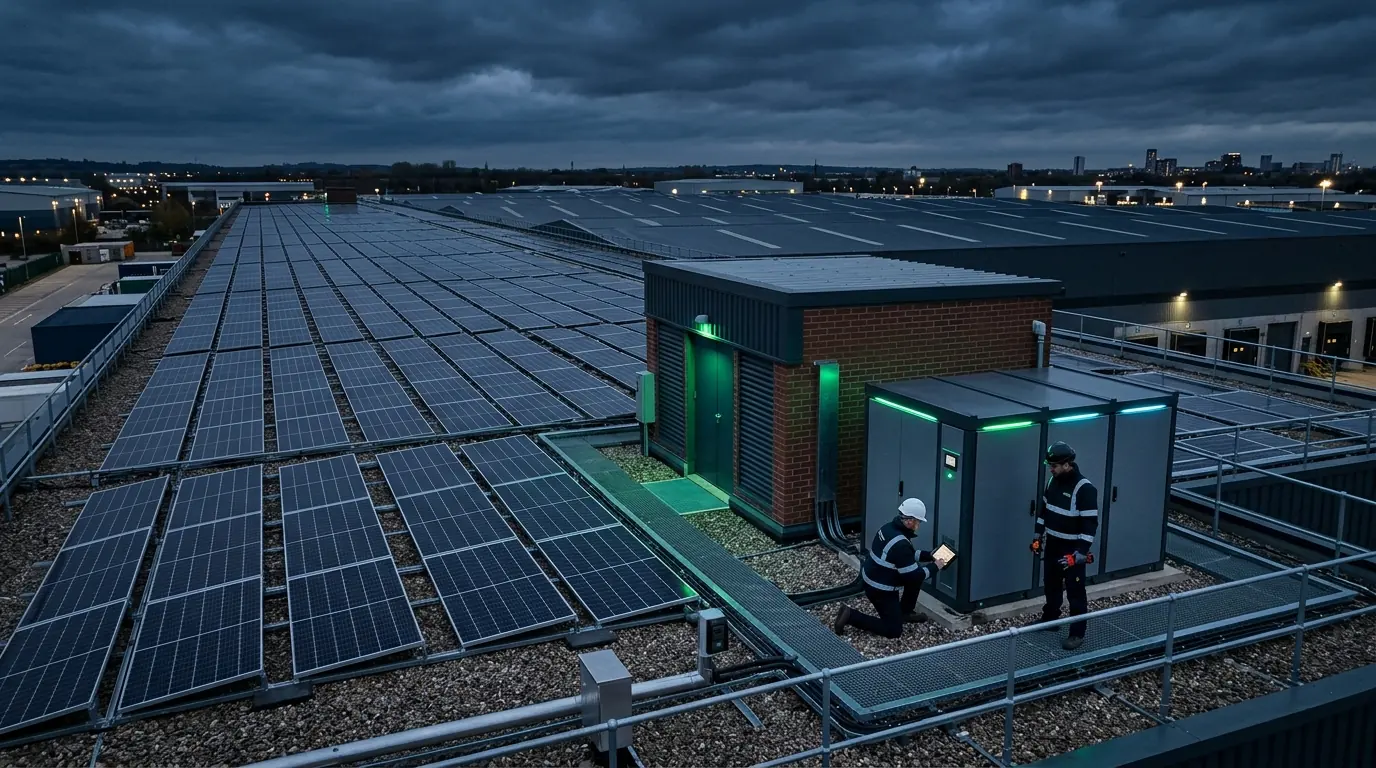
Why microgrids suit second-life storage
A microgrid combines local generation, typically solar and sometimes wind or diesel, with storage and loads that can run independently of the main grid. Storage is often the most expensive component, so lower-cost second-life modules can make projects viable that would not be with new batteries.
Many microgrid loads are predictable, such as lighting, pumping, refrigeration and communications, which suits the moderate, regular cycling that aged modules handle well. Where the grid connection is weak or unreliable, second-life storage also reduces reliance on diesel generation.
Designing around aged modules
System sizing should start from measured capacity at commissioning, not rated capacity, and include an allowance for further degradation over the design life. Inverter and charge controller settings should reflect the modules' voltage range and conservative current limits.
Enclosures need proper thermal management, because heat accelerates ageing. In hot climates this can mean shading, ventilation or active cooling. Fire detection and suppression suited to lithium-ion systems should be part of the design from the start.
- Size from measured capacity plus a degradation allowance
- Set conservative voltage and current limits
- Provide thermal management suited to the site climate
- Include lithium-ion appropriate fire detection and suppression
- Plan remote monitoring where site visits are difficult
Operations and end of life
Remote sites need maintenance plans that local technicians can follow, with clear procedures for isolating and replacing modules. Remote telemetry helps the supplier support the site without frequent travel and identifies failing modules before they affect the whole system.
Plans should also cover what happens when the modules reach the end of their second life. Take-back terms, transport arrangements and recycling routes are easier to agree at the start than to arrange years later from a remote location.