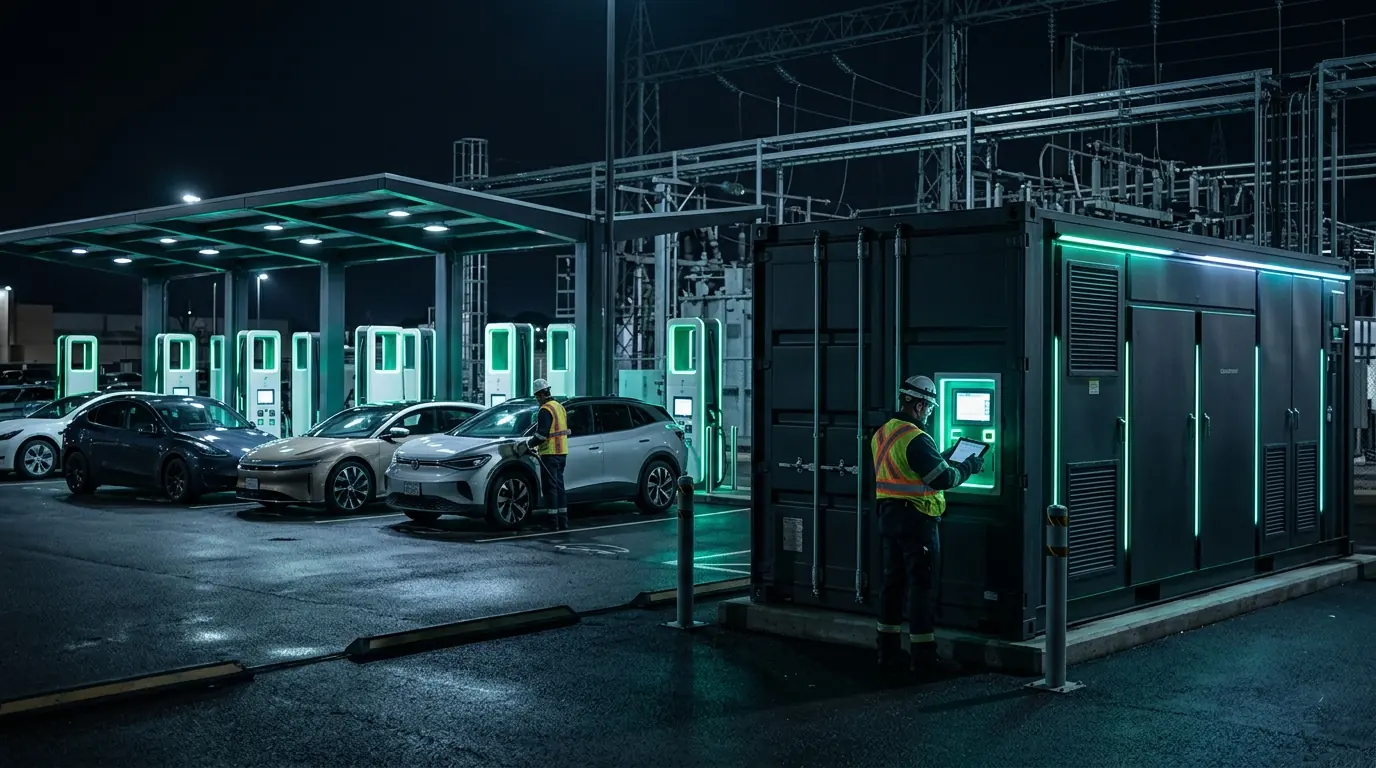
The grid connection problem
Fast chargers draw high power for short periods. At many sites the grid connection cannot supply several fast chargers at once without an expensive upgrade, and in some areas upgrades take a long time to deliver. Where tariffs include demand charges, even occasional peaks can raise electricity bills significantly.
A battery buffer charges slowly from the grid or on-site solar between sessions and discharges during charging peaks. The site can then offer higher charging power than the connection alone would allow, and peak demand seen by the grid is reduced.
Sizing the buffer
Sizing starts with the expected charging profile: how many sessions, at what power, and how closely they cluster. The buffer must supply the difference between charger demand and grid capacity during peaks, and it must be able to recharge before the next cluster of sessions arrives.
Second-life modules need extra attention on power capability, because high-rate discharge stresses aged cells. Oversizing the energy capacity lowers the per-module current, which reduces heat and slows degradation. Higher-grade modules are the better choice for this duty.
Building the business case
The value of a buffer comes from avoided or deferred grid upgrades, lower demand charges, and the ability to open or expand a site sooner. On-site solar can add further savings. These benefits should be compared against the buffer's cost, including enclosure, power electronics, installation and maintenance.
Operators should also consider how the buffer will be managed as modules age. Energy management software can adjust power limits over time, and warranty terms should be reviewed against the expected charging duty.
- Quantify avoided grid upgrade cost and timeline
- Model demand charge savings under the local tariff
- Include enclosure, inverter and installation costs
- Plan for derating as modules age
Field note