Services that suit second-life modules
Aged modules perform best in applications with moderate power and predictable cycling. Shifting solar generation from midday to evening, shaving demand peaks at commercial sites, and providing backup power for telecom or critical loads all fit that profile. These uses tolerate reduced capacity as long as the system is sized accordingly.
Such services also make degradation easier to predict, because the duty cycle is regular. That predictability supports longer warranty terms and clearer financial models for the system owner.
Services to approach with caution
Fast frequency response and similar services demand rapid, high-power charge and discharge, often many times a day. Aged modules with higher internal resistance generate more heat under these conditions and may degrade quickly. Some markets also require performance guarantees that are hard to meet with variable second-life hardware.
That does not rule these services out entirely, but they need careful derating, strong thermal management and modules at the upper end of the grade range. In many cases new cells are a better choice for high-power applications.
| Service | Typical power demand | Second-life fit |
|---|---|---|
| Solar energy shifting | Moderate, daily cycle | Good |
| Peak shaving | Moderate, event driven | Good |
| Backup power | Low cycling, occasional use | Very good |
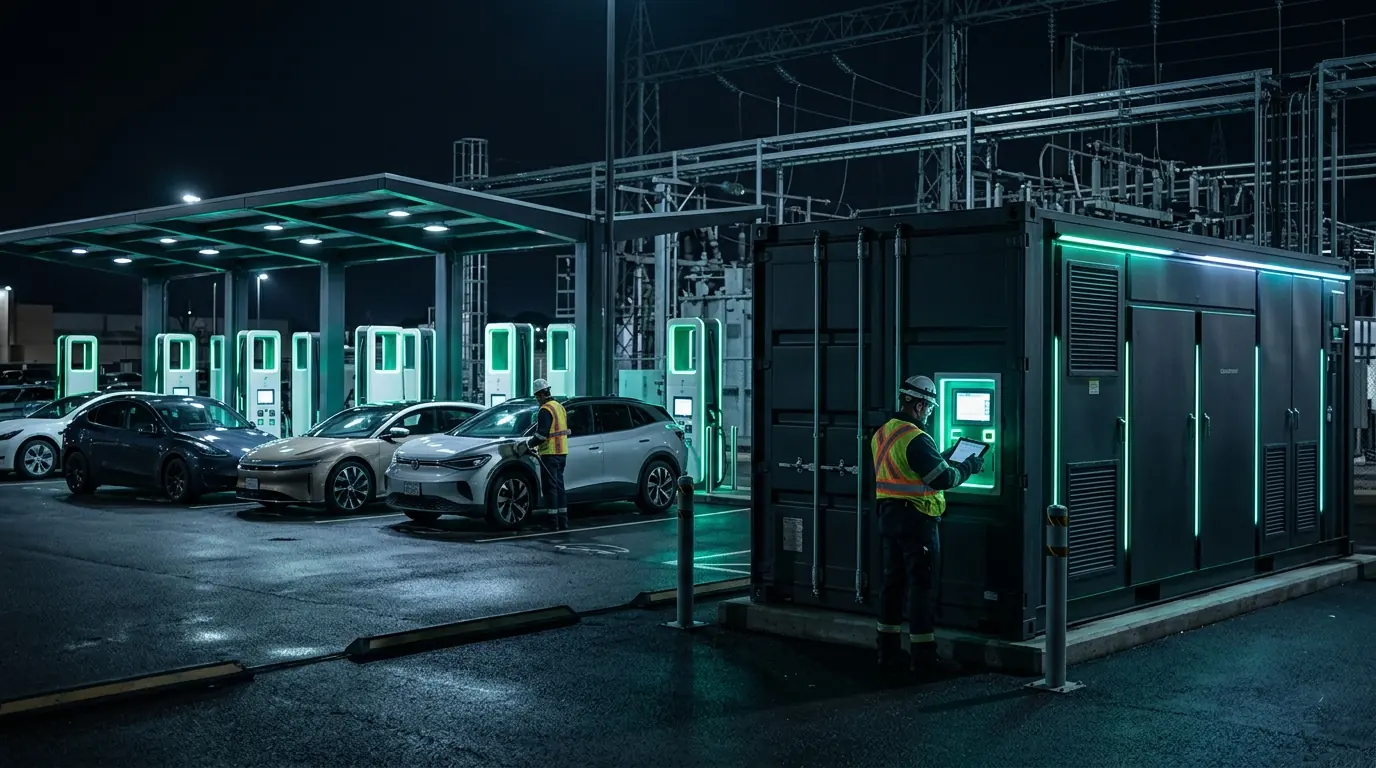
| EV charging buffer | High peaks, moderate energy | Good with sizing |
| Fast frequency response | High power, frequent | Limited |
Planning revenue within safe limits
Operators often want to stack several services to improve returns. With second-life hardware, stacking should be planned around the modules' condition and the warranty's operating limits. A system that earns more in year one but degrades rapidly may deliver less value over its life.
Energy management software can enforce limits on power, depth of discharge and temperature, and should be configured with input from the module supplier. Grade A modules are generally the best candidates where more demanding services are part of the plan.
- Size the system for the service's power and energy needs
- Set depth-of-discharge and power limits in software
- Reserve higher-grade modules for demanding duty
- Review degradation data annually and adjust dispatch
Field note