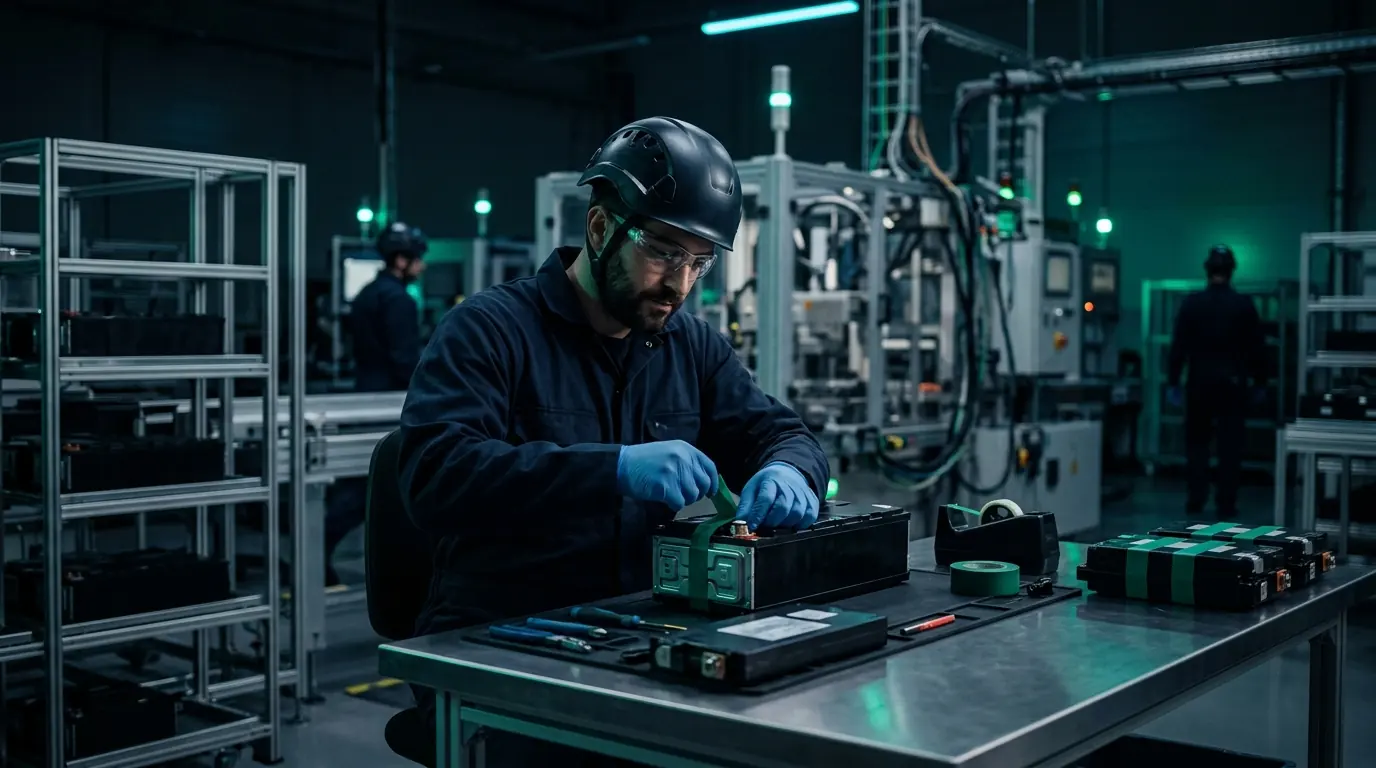
Thermal behaviour of NMC 811 (4680)
4680 cells carry the same high-nickel chemistry as 2170s but in a larger can with more energy per cell, so a single failing cell releases more heat. Structural packs also make it harder to isolate an individual failing cell during handling.
Whatever the chemistry, heat, mechanical damage and overcharge are the three triggers to control. Storage areas need detection, separation and a clear response plan.
Packaging and transport checklist
Structural packs are part of the vehicle body, so removal needs OEM procedure and lifting equipment rated for the full pack mass. Transport the pack whole rather than attempting field disassembly.
- State of charge below 30%, recorded per serial
- Terminals taped or capped; service disconnect removed
- UN-approved packaging with non-conductive cushioning
- Class 9 marks, UN number and emergency contact on every package
- Damage status declared on the manifest before pickup
Disassembly considerations
Structural adhesive and foam encapsulation make disassembly slow. Specialised cutting and thermal debonding cells are used, and many packs move directly to discharge and shredding.
Every disassembly step starts with verified isolation and insulated tooling. If a module cannot be opened safely, it is discharged and routed to shredding instead.
Field note