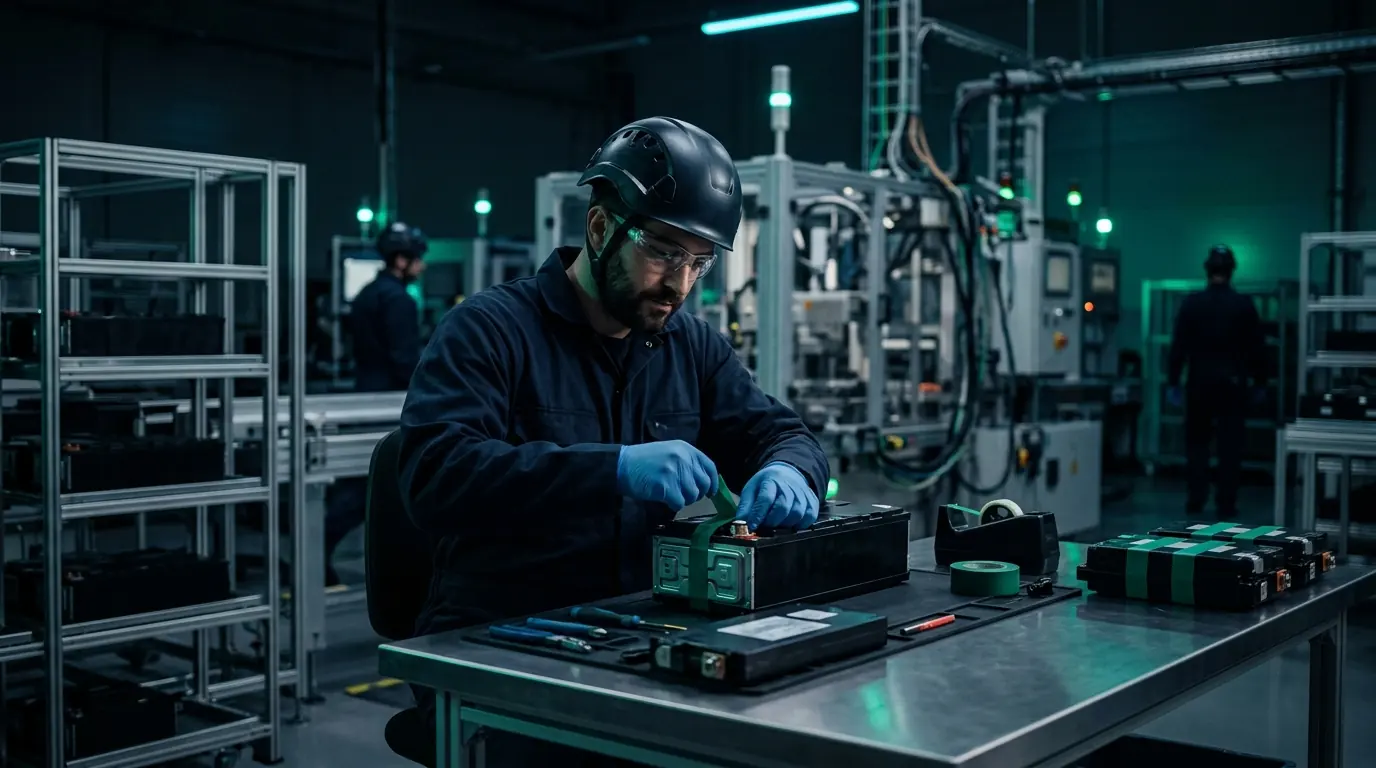
Thermal behaviour of NCA Pouch
NCA shares the oxygen-release behaviour of high-nickel cathodes and is generally considered among the more reactive EV chemistries. Pouch cells have no rigid can, so mechanical damage and swelling translate quickly into safety risk.
Whatever the chemistry, heat, mechanical damage and overcharge are the three triggers to control. Storage areas need detection, separation and a clear response plan.
Packaging and transport checklist
Treat every NCA pouch module as potentially damaged until inspected: individual containment for any swelled unit, non-conductive cushioning and no compression during transport.
- State of charge below 30%, recorded per serial
- Terminals taped or capped; service disconnect removed
- UN-approved packaging with non-conductive cushioning
- Class 9 marks, UN number and emergency contact on every package
- Damage status declared on the manifest before pickup
Disassembly considerations
Pouch stacks are laminated and often adhesive-bonded into modules. Harvesting is possible but slow, and the risk of puncturing a pouch means most stacks are discharged and shredded.
Every disassembly step starts with verified isolation and insulated tooling. If a module cannot be opened safely, it is discharged and routed to shredding instead.
Field note