Start with matched modules
Retired modules vary in capacity, resistance and thermal behaviour. In a series string, the weakest module limits usable capacity and tends to degrade fastest, dragging the rest of the string with it. Designing a second-life system therefore starts with matching: grouping modules of the same chemistry and format with close capacity and impedance values into the same string.
Where possible, modules from the same vehicle model are kept together, because their mechanical and electrical interfaces are consistent. Mixing formats increases integration work and complicates thermal management. A well-matched string can deliver predictable performance for years, while a poorly matched one can lose usable capacity quickly.
Electrical and control design
Second-life systems need a battery management system designed for stationary use and for the modules actually installed. It must monitor cell or module voltages and temperatures, balance cells, enforce voltage and current limits and communicate with the inverter and site controller. Reusing the original vehicle BMS is usually impractical because it is built around the vehicle's architecture and software.
Operating limits are normally set more conservatively than in the vehicle. Narrowing the state-of-charge window and limiting charge and discharge rates reduces stress and extends life, at the cost of some usable energy. Designers size the system with that derating built in, so the customer receives the capacity promised for the full warranty period.
- Stationary-rated BMS matched to the installed modules
- Narrowed state-of-charge window and C-rate limits
- Inverter compatibility with the string voltage range
- Remote monitoring for state-of-health tracking
Enclosure, safety and certification
Second-life systems must meet the same safety expectations as new storage. That means fire-rated enclosures, thermal management sized for the modules and climate, gas and smoke detection, appropriate suppression and adequate separation from buildings. Standards and codes such as IEC 62933, UL 9540 and UL 9540A in North America, and NFPA 855 for installation, are commonly referenced, and requirements vary by jurisdiction.
Certification can be more demanding for repurposed products because each batch of modules differs. Documenting grading data, matching criteria and test results helps demonstrate consistency. Under the EU Battery Regulation, repurposed batteries are treated as new products placed on the market, which brings conformity and information obligations for whoever repurposes them.
Field note
Choosing the right application
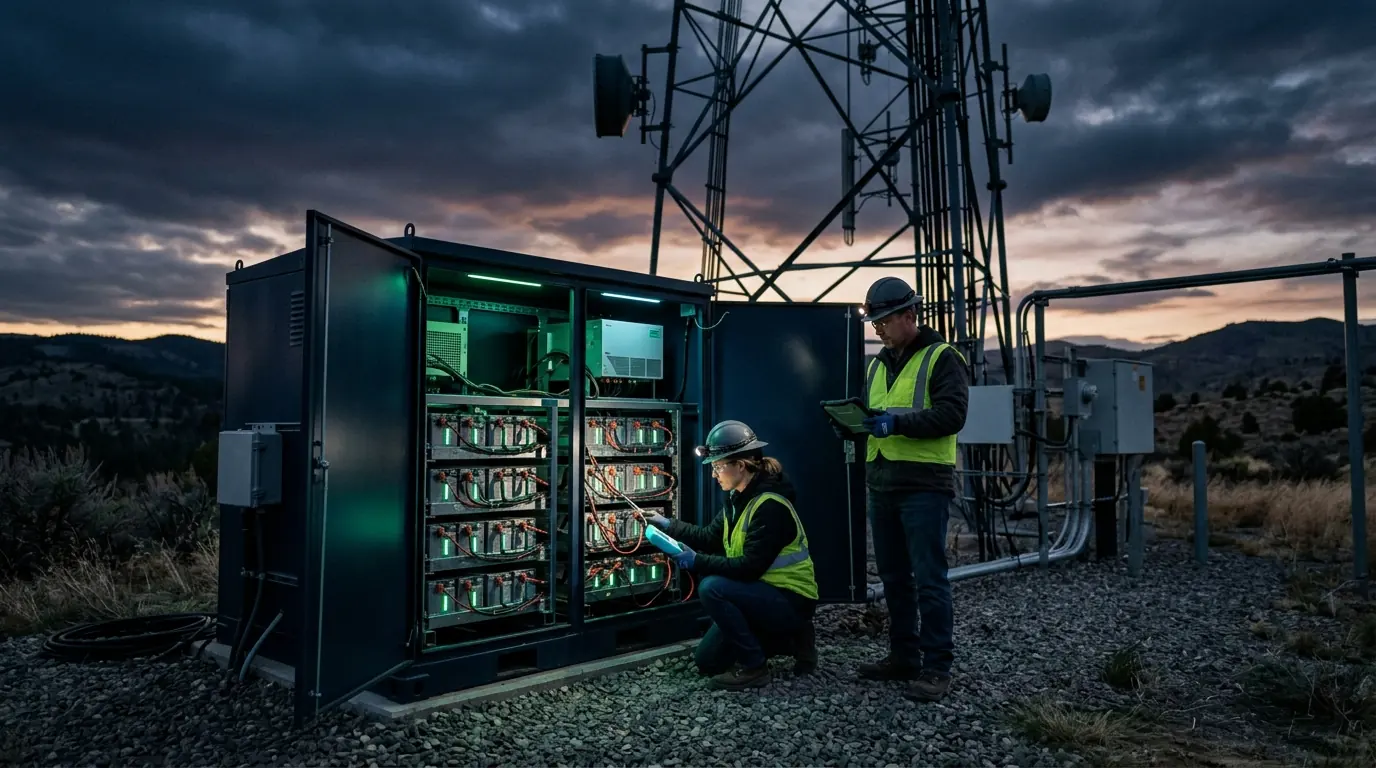
Second-life systems perform best where cost matters more than energy density and where duty cycles are moderate. Telecom backup, solar self-consumption, peak shaving for commercial sites and buffering for EV charging are common fits. Applications requiring very high power, fast frequency response or tight footprint constraints are usually better served by new batteries.
Matching application to grade is part of the design. Grade A modules can handle daily cycling, while Grade B and C modules suit lighter duty. Being realistic about that fit is what allows a second-life system to offer a meaningful warranty and a lower cost per usable kilowatt-hour over its life.