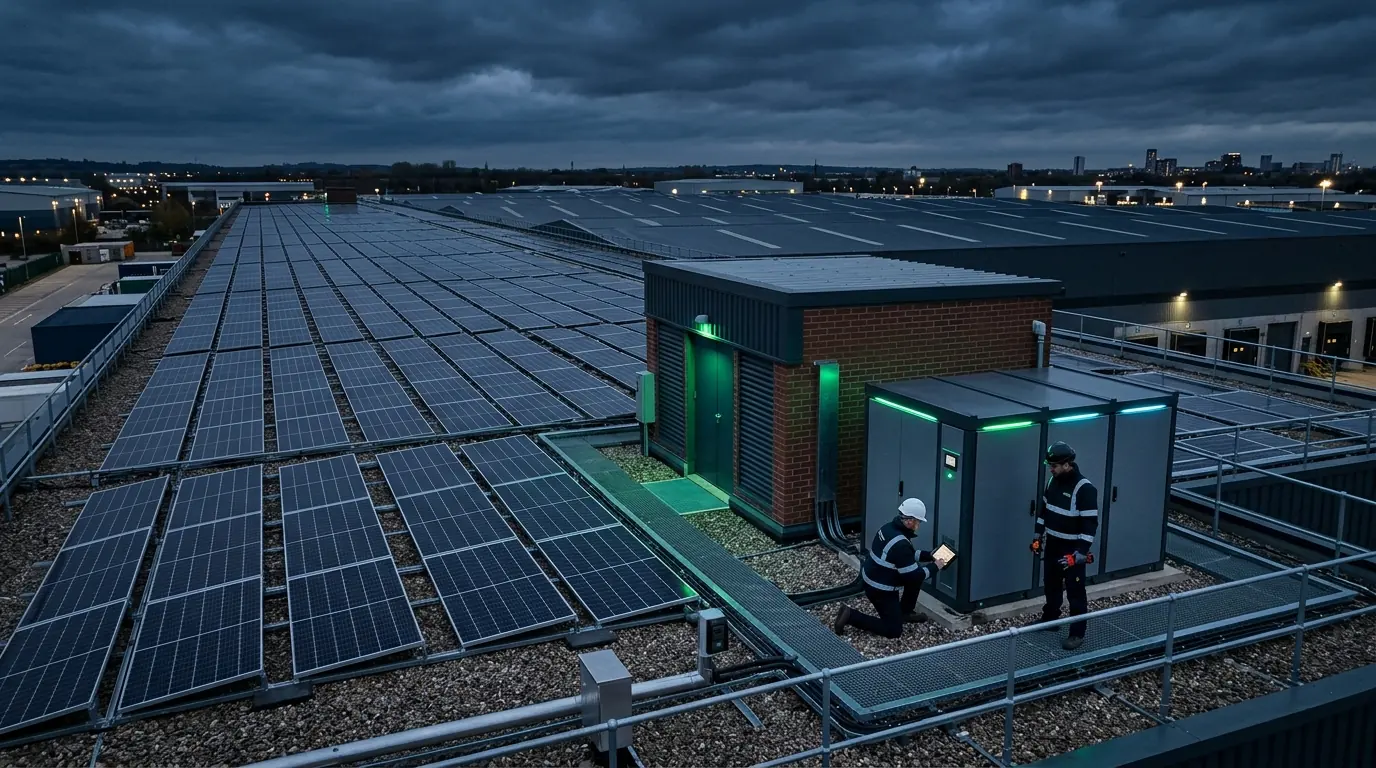
Buying second-life modules with confidence
Second-life supply is only as good as the grading behind it. Developers should ask for module-level capacity and resistance data rather than a pack-level average, and should state which grade they are buying. Grade A material retains at least 85% of rated capacity and suits more demanding duty cycles, while Grade B, between 75% and 85%, is better matched to shallow, infrequent cycling such as backup or peak shaving. Buying the wrong grade for the duty is the most common cause of disappointing performance.
Matching matters as much as absolute capacity. A string built from modules with a wide impedance spread ages at the pace of its weakest unit, so a sensible specification sets a maximum spread within each string and asks the supplier to explain how modules were grouped. Test data should travel with every serial number into the developer's asset register, where it becomes the baseline for monitoring degradation and for any warranty discussion that follows during operation.
- Grade band and minimum retained capacity per module
- Maximum internal resistance spread within a string
- Test method, temperature and rate used for capacity measurement
- Serial-level data export for the project's monitoring system
Designing projects that are easy to retire
A storage project that ignores its own end of life leaves a liability for whoever owns the asset later. Rack layouts that allow modules to be removed without dismantling the enclosure, clear chemistry labelling on every module and accessible isolation points all reduce decommissioning cost and risk. These choices cost very little at design stage and a great deal to retrofit, particularly once a site has changed hands or the original integrator is no longer involved in operations.
Contracts should say who takes the batteries back, under what price mechanism and under which transport classification. Where the developer bought second-life modules, the original supplier is often the natural take-back partner because it already holds the serial history. That history shortens final grading, supports a cleaner recovery certificate and gives the developer a documented end-of-life route that lenders, insurers and future buyers of the project can rely on.
Field note
Compliance obligations that follow the asset
In the EU, industrial batteries fall within the scope of the Battery Regulation (EU) 2023/1542, and industrial batteries with a capacity above 2 kWh are among those that will need a digital battery passport from February 2027. Developers that repurpose EV modules should check carefully whether their role makes them the economic operator placing a repurposed battery on the market, because that role carries its own set of labelling, documentation and producer responsibility duties under the regulation.
In India, the Battery Waste Management Rules 2022 place extended producer responsibility on producers, and entities that import or refurbish batteries can fall within that definition. Whatever the jurisdiction, the safe working assumption is that end-of-life batteries from a storage site must go to a registered recycler, with the resulting certificate kept alongside the project records. Treating that paperwork as part of asset management, not an afterthought, avoids difficult questions at sale or refinancing.