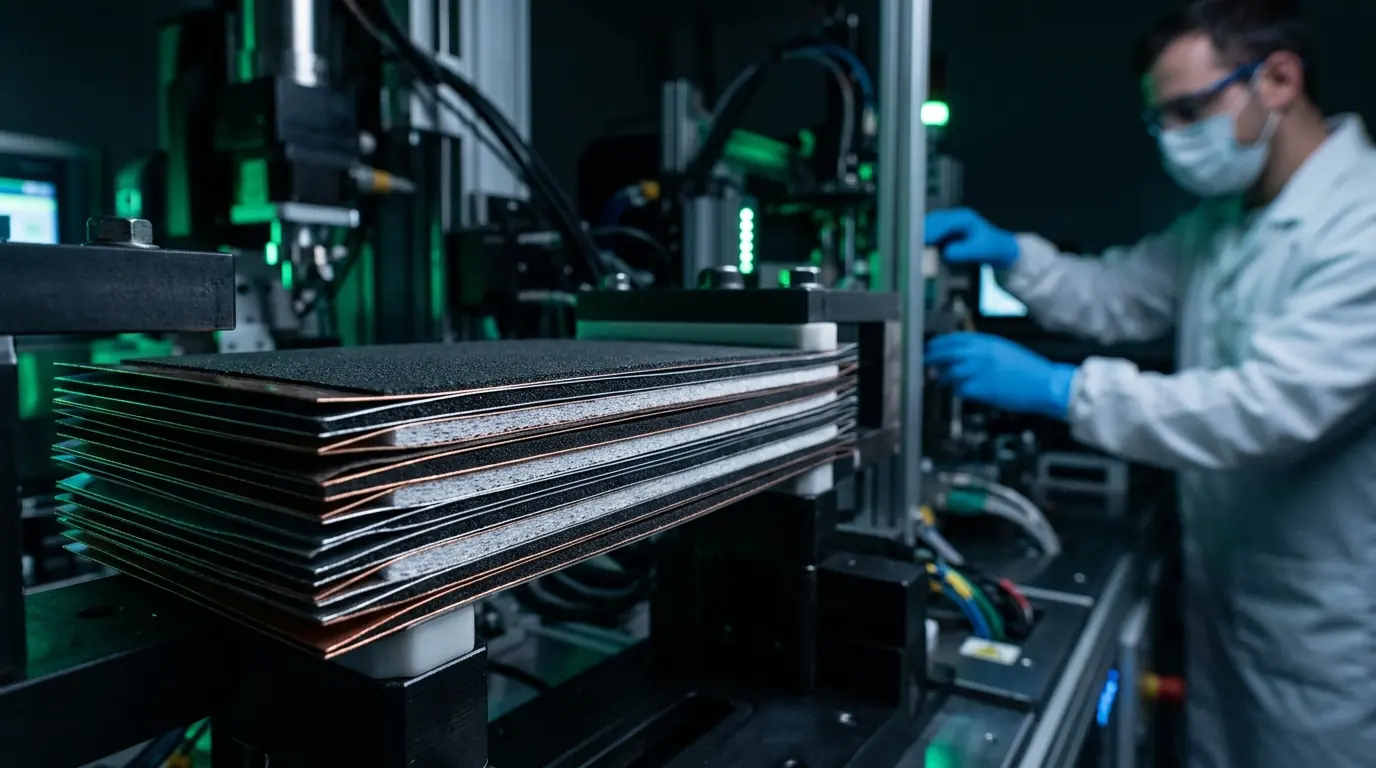
How black mass is made
Black mass is produced during the mechanical stage of recycling. Discharged cells or modules are shredded, usually under an inert atmosphere or with electrolyte capture, and the shredded material is dried to drive off solvents. Screens, magnets, eddy-current separators and density tables then pull out steel, aluminium, copper foil and plastics. What remains is a fine, dark powder made of cathode active material mixed with anode graphite.
The quality of that powder depends heavily on how well the upstream steps are run. Poor separation leaves more copper and aluminium in the product, inadequate drying leaves residual electrolyte and fluorine, and mixing chemistries dilutes the valuable metals. Well-run lines keep feed streams segregated by chemistry so that each black mass lot has a predictable composition and a clearer route to a buyer.
Sampling and assay
Because black mass is traded on content, the sample has to represent the whole lot. Lots are homogenised and sampled at defined increments, then split into reference portions held by seller, buyer and, where agreed, an independent umpire laboratory. Samples are sealed and labelled so that any later dispute can be settled on material both parties accept.
The assay itself is usually carried out by ICP-OES or ICP-MS after acid digestion, covering lithium, nickel, cobalt, manganese, copper, aluminium, iron and fluoride, plus moisture and carbon content. Differences between laboratories are normal, so contracts set splitting limits: if the two results fall within the limit they are averaged, and if not, the umpire result decides.
- Payable metals: nickel, cobalt, lithium and sometimes manganese
- Penalty elements: copper, aluminium, iron, fluoride
- Physical parameters: moisture, particle size, graphite content
- Process metadata: source chemistry and shredding method
How black mass is priced
Black mass is generally priced as a payable percentage of the contained metal value. The contained nickel and cobalt are valued against published index prices, the payable percentage is applied, and deductions are made for penalty elements and moisture above the agreed threshold. Lithium is increasingly paid for as well, though payables for lithium have historically been lower and more volatile than for nickel and cobalt.
This structure means chemistry is decisive. NMC and NCA black mass carries substantial nickel and cobalt and commands strong payables. LFP black mass contains no nickel or cobalt, so its value rests on lithium and, to a degree, on avoided disposal cost. When metal prices fall, payables tend to compress as refiners protect their margins, which is why black mass values move more sharply than the underlying metals.
| Black mass source | Main payable metals | Relative value |
|---|---|---|
| NMC 811 | Nickel, cobalt, lithium | High |
| NCA | Nickel, cobalt, lithium | High |
| LMO | Manganese, lithium | Low to moderate |
| LFP | Lithium only | Low |
Field note