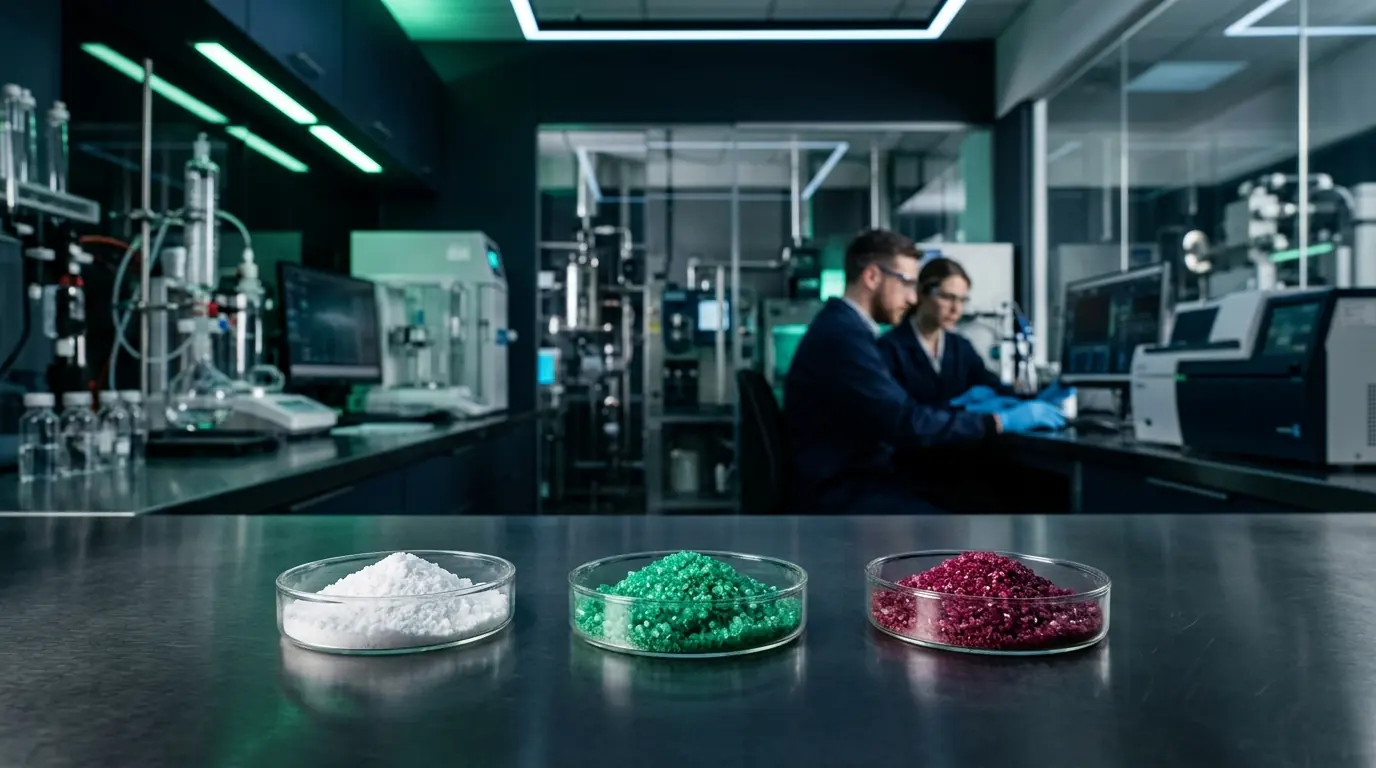
What is inside a sodium-ion cell
Sodium-ion cells replace lithium with sodium as the charge carrier. Cathodes commonly use layered transition metal oxides, polyanionic compounds or Prussian blue analogues, and the anode is usually hard carbon rather than graphite. Because sodium does not alloy with aluminium at low potentials, both electrodes can use aluminium foil as the current collector, whereas lithium-ion cells need copper foil on the anode side. That single design choice has significant consequences for recycling economics.
The chemistry offers lower raw material cost, avoids several supply-constrained metals and performs well at low temperatures. These traits make it attractive for stationary storage, entry-level vehicles and two-wheelers. Its energy density is lower than most lithium-ion chemistries, so it is expected to complement lithium-ion rather than replace it, particularly in applications where weight and volume matter less than cost, safety and resilience of supply.
The recycling economics problem
Lithium-ion recycling is funded largely by the value of recovered lithium, nickel, cobalt and copper. A typical sodium-ion cell removes most of those streams. What remains is sodium, aluminium, iron or manganese depending on the cathode, and hard carbon, all of which are relatively cheap. The result is a much lower gross value per tonne, and in many cases the cost of collection and processing will exceed the value of the materials recovered.
That shifts the business model. Instead of earning mainly from metal sales, recyclers may need gate fees or producer-funded schemes to process sodium-ion batteries safely. Extended producer responsibility frameworks, which already require producers to finance collection and recycling, become the main financial backbone for the chemistry. Fleet owners and storage operators adopting sodium-ion should expect end-of-life to carry a cost rather than a payment.
Field note
Operational changes recyclers should plan for
The first challenge is identification. Sodium-ion and LFP packs can look very similar from the outside, and mixing sodium-ion material into a lithium-ion black mass stream dilutes its payable metal content and therefore its price. Clear labelling, serial-level records and chemistry verification at intake prevent that contamination and protect the terms of existing black mass contracts, which are usually written around single-chemistry lithium-ion feed.
Process routes also need review. Some sodium-ion cells can be discharged to very low voltage, which may simplify safe handling, but electrolyte composition and cathode behaviour differ from lithium-ion. Operators should validate discharge, shredding, separation and any hydrometallurgical steps on small trial batches before accepting commercial volumes, and should keep the streams segregated until the process is proven and a buyer for the outputs has been identified.
- Verify chemistry at intake rather than relying on pack appearance
- Keep sodium-ion segregated from lithium-ion black mass
- Validate each process step on trial batches first
- Agree fee-based terms where recovered value is negative