Why vehicles retire batteries early
An electric vehicle needs enough range and power to meet its owner's expectations every day. As capacity fades, range shrinks, and at some point drivers or fleet managers decide the pack no longer suits the job. Manufacturer warranties commonly reference a capacity threshold of around 70%, which reinforces a widespread belief that a battery below that level is finished, even though the cells may still work perfectly well.
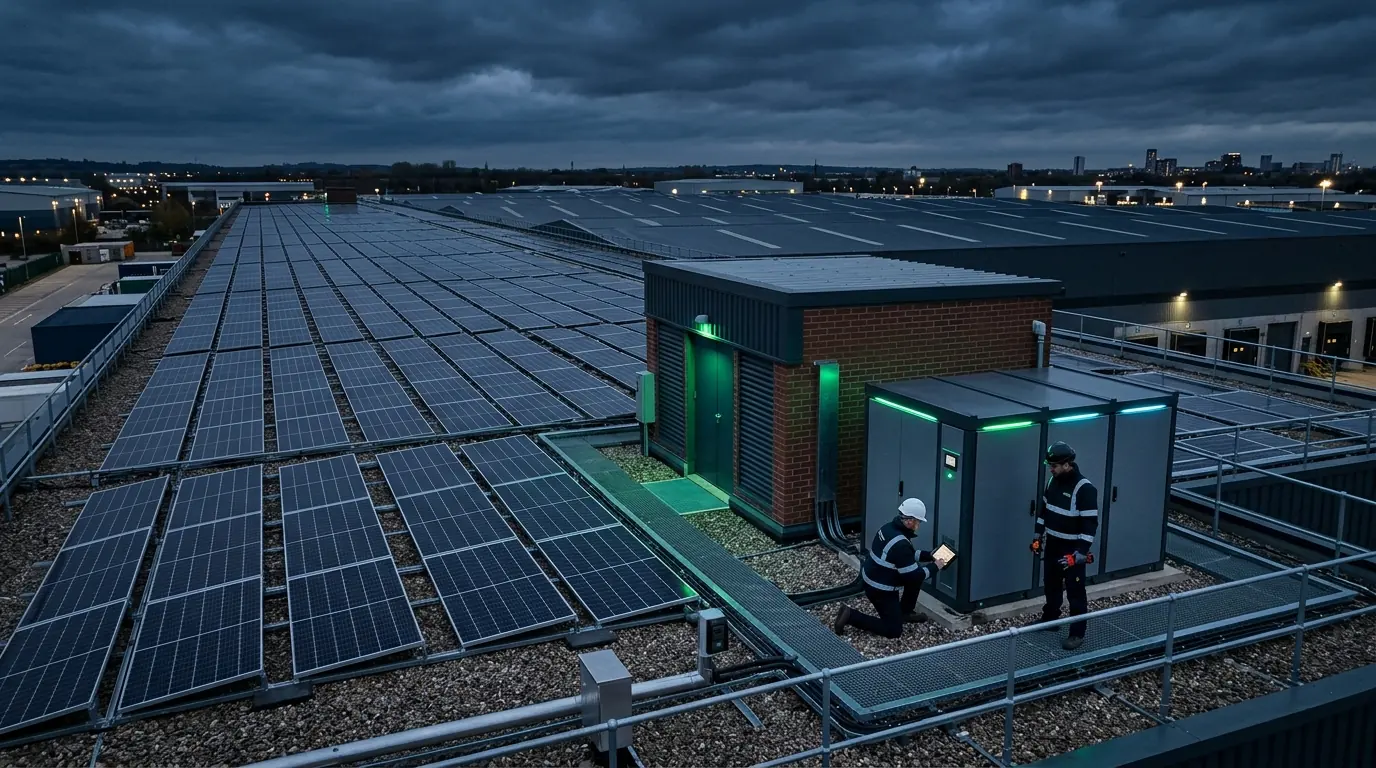
For stationary storage, weight and volume matter far less than they do in a vehicle. A pack that no longer gives a car acceptable range can still store useful energy for a building, a telecom tower or a solar installation, where a slightly larger footprint is rarely a problem. The battery is not dead; it has simply reached the end of one application and may be well suited to another.
What testing usually reveals
Pack-level readings average the condition of every module inside. When modules are tested individually, it is common to find that most are in reasonable condition while a few are noticeably weaker. In a vehicle, the weakest module limits the entire pack, dragging down usable range. In a rebuilt stationary system, that weak module can simply be left out, and the healthy modules can be matched and reused.
That is why module-level grading unlocks so much value. On our benches, Grade A modules retain at least 85% of their capacity and Grade B modules between 75% and 85%, and both grades can serve stationary storage in the right application. Only modules below useful thresholds, or those with physical defects, move directly to hydrometallurgical refining for metal recovery. Nothing is discarded; the route simply follows the measured condition.
- Grade A (85% and above): grid-tied or daily-cycling storage
- Grade B (75% to 85%): backup, telecom and light-duty storage
- Grade C (65% to 75%): low-demand applications or refining
- Below 65% or defective: hydrometallurgical refining
Capturing the remaining value
The value gap between a reusable module and the same module sold as black mass can be large, especially for LFP chemistry, where refining value is comparatively modest. Owners who have packs tested before selling usually realise considerably more value than those who accept a flat price per pack, because a flat price is effectively set on the assumption that everything goes to refining.
Timing matters too. Packs stored for long periods at high state of charge or high temperature lose capacity faster and are more likely to develop faults. Planning retirements, storing packs at low state of charge in cool, ventilated conditions and booking collection promptly keeps more modules in reusable condition and protects the value an owner can expect to recover. A little planning here usually pays for itself on the first consignment.
Field note