Gothenburg — Nordic Second-Life Campus
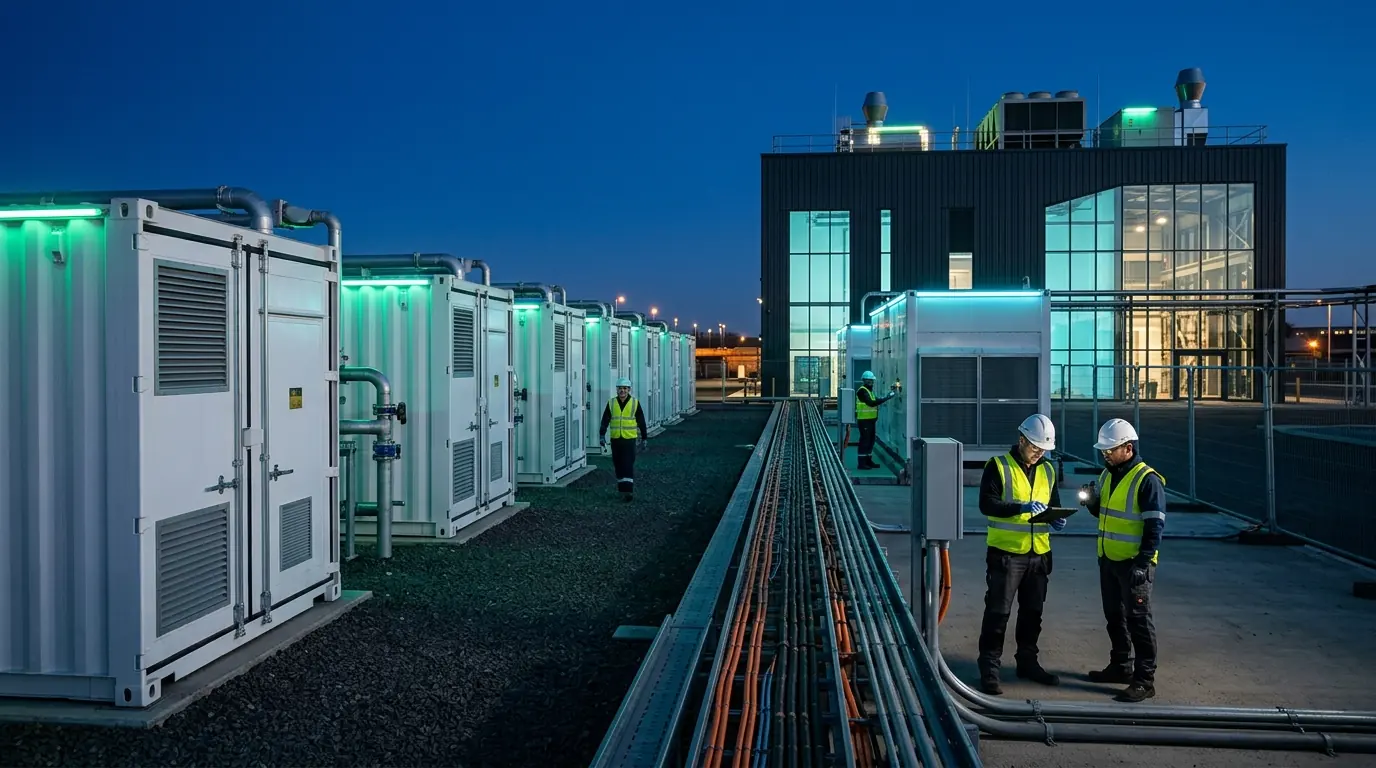
Gothenburg, Sweden facility: second-life works rebuilding graded modules into warrantied stationary storage systems. Rated at 26,000 tonnes per annum and operating since 2018.

Annual capacity
26,000 TPA
Operating lines
3
Cities collected
5
In operation since
2018
About the Gothenburg, Sweden facility
Gothenburg is Sweden's main automotive and port city, with vehicle engineering, heavy truck production and Scandinavia's largest port. The second-life campus opened on Lindholmen in 2018 to build stationary storage systems from graded modules, drawing on the region's heavy-vehicle and electrification expertise. It is the network's oldest second-life campus, and its engineering team works closely with heavy-vehicle specialists in the region to design systems that make the most of truck and bus modules.
With 26,000 TPA of capacity, it is the network's largest second-life site. It uses graded modules from passenger cars, trucks and buses to build storage for Nordic commercial, marine and grid-support customers, and ships finished systems by road or sea from the port next door. Each system is commissioned and tested before dispatch, and ships with telemetry so buyers can track its state of health over its service life.
What arrives at the gate
What sets this site apart
Largest second-life site
26,000 TPA of capacity dedicated to storage builds.
Heavy-vehicle modules
Builds systems from truck and bus modules as well as car modules.
Nordic market focus
Systems designed for Scandinavian customers and conditions.
What happens to material here

- 1
Module matching
Graded modules are grouped by capacity, impedance and thermal behaviour so strings age evenly.
- 2
Restringing & BMS retrofit
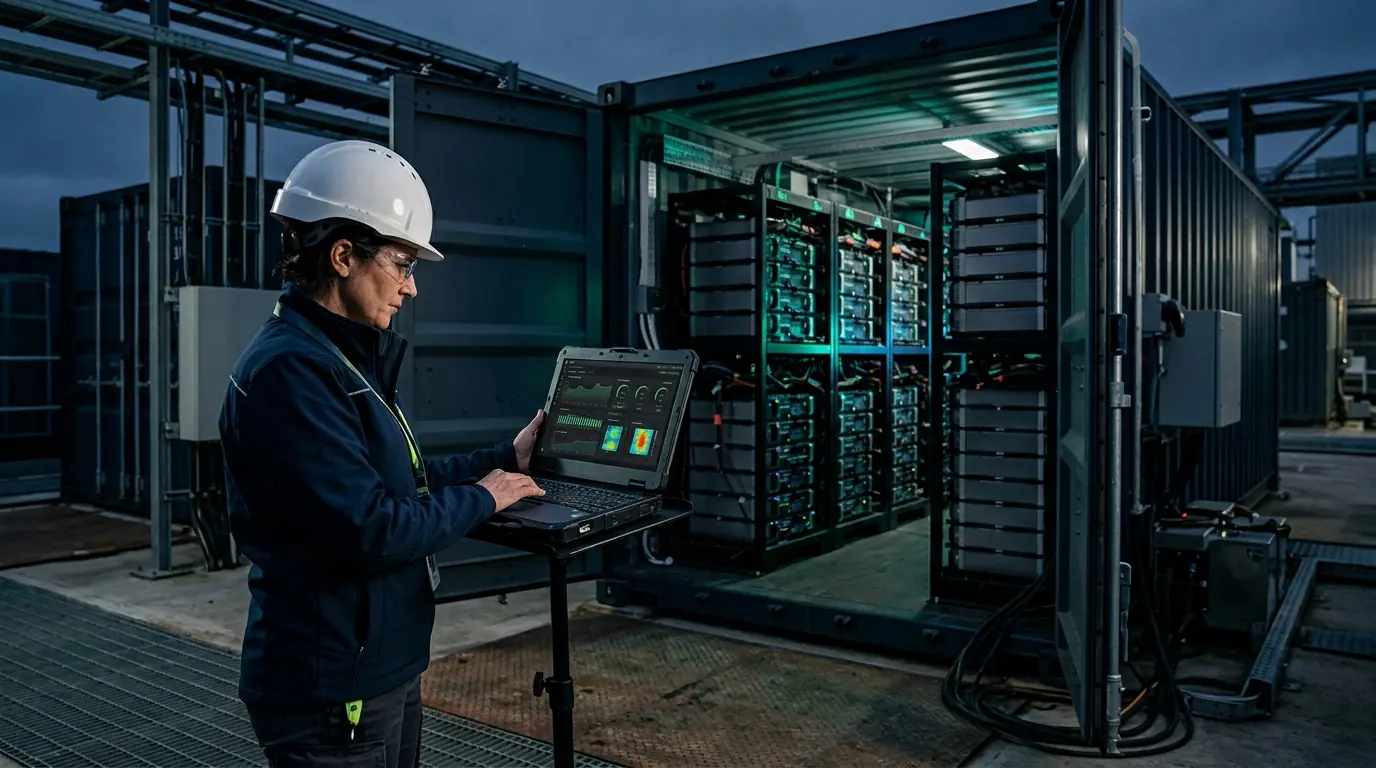
Matched modules are rebuilt into racks with a new battery management system, fusing and contactors.
- 3
Enclosure integration
Racks are installed in fire-rated containers with HVAC, aerosol suppression and gas detection.
- 4
Commissioning cycles
Full charge-discharge commissioning validates round-trip efficiency, SOC accuracy and protection trips.
- 5
Warranty registration
Each unit ships with a 5-year performance warranty and remote telemetry for state-of-health tracking.
Where material goes next
| Role | Facility | Distance |
|---|---|---|
| Cell Grading & Diagnostics | Warsaw — Mazovia Grading Centre | 838 km |
| Hydrometallurgical Refinery | Rotterdam — Maasvlakte Refining Works | 802 km |
| Integrated Recovery Campus | Toronto — Ontario Recovery Campus | 6,109 km |
Local rules
EU Battery Regulation (EU) 2023/1542 and the Swedish battery ordinance · Swedish Environmental Protection Agency (Naturvardsverket)
The campus operates under Swedish environmental permits and the EU Battery Regulation (EU) 2023/1542, including its rules on repurposed batteries. Systems follow applicable European safety standards.
Before you book into Gothenburg, Sweden
- Only graded modules are accepted.
- Modules must include grade reports.
- Finished systems ship by road or sea.
- Buyer visits can be arranged.
Damaged or defective packs are handled under a separate quarantine protocol — flag them in the form and the team calls you back the same day.
Gothenburg, Sweden site: common questions
Does Gothenburg use truck batteries?
Yes. Graded heavy-vehicle modules are part of its feedstock.
Where are Gothenburg systems used?
Mainly in Nordic commercial, marine and grid-support applications.
What are the opening hours at Gothenburg, Sweden?
Monday to Friday 08:00 – 20:00, Saturday 08:00 – 16:00. Sunday: emergency and damaged-pack intake only, by prior booking.
How do I book a collection into Gothenburg, Sweden?
Use the booking button on this page with pack counts, chemistry and condition. The despatch desk confirms a window within one working day and ships UN-approved packaging before collection.