What the site does
Melbourne is Australia's second-largest city and a major freight and logistics centre. The collection yard opened on Maidstone Street in Altona North in 2022 to give Victoria and southern Australia a formal collection point for EV and storage batteries, which otherwise faced long, costly journeys to processors. Its catchment covers Victoria, South Australia and Tasmania, where formal battery collection options are still limited compared with larger markets.
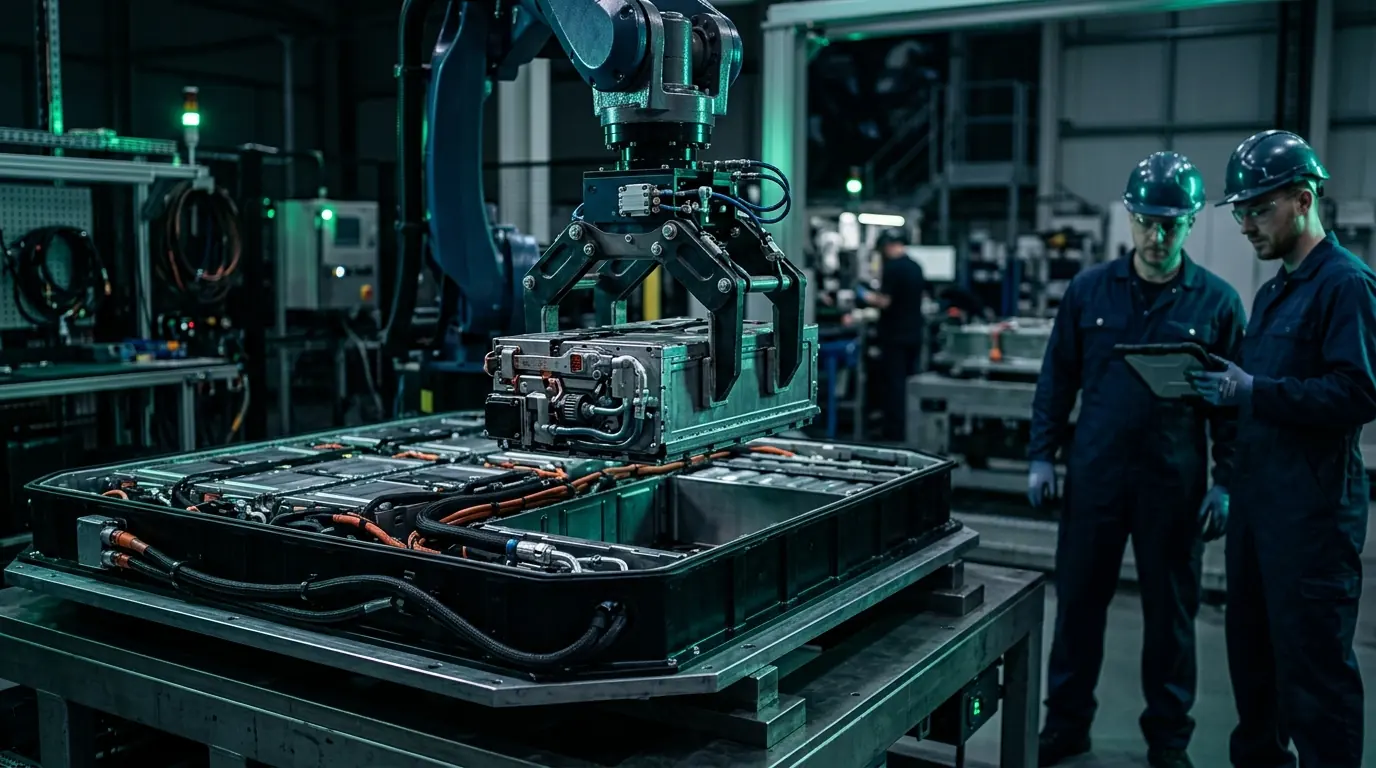
At 12,000 TPA, the yard consolidates packs from fleets, dealers, dismantlers and home and commercial storage installers, then prepares them for processing elsewhere. Australia's high rate of home solar-plus-storage adoption makes residential and commercial storage batteries a distinctive part of its intake. Packs are de-energised and sorted on arrival, and custody records follow each unit to its processing site. Storage installers book collections directly.
What arrives at the gate
Feedstock at Melbourne, Victoria reflects its catchment and plant type. Every consignment is weighed, photographed and logged against the originating manifest before it enters the process area.
- Fleet and dealer packs
- Home and commercial storage batteries
- Bus and transport fleet packs
- Dismantler returns
The process, step by step
The 3 operating lines — hazmat transport staging, pack de-energising, module sorting & consolidation — run the sequence below.
| Stage | What happens |
|---|---|
| Booking & manifest | Pickup is scheduled against an approved manifest listing chemistry, pack count, mass and damage status. |
| Packaging supply | UN 3480 / UN 3481 approved containers, vermiculite and Class 9 labelling are supplied free on registration. |
| Collection & transit | ADR-class vehicles with trained hazmat crews and GPS telemetry move consignments to the yard. |
| Weighbridge intake | Consignments are weighed, photographed and reconciled against the manifest within 24 hours of arrival. |
| De-energising & sorting | Packs are discharged to safe state of charge and sorted by chemistry and destination plant. |
| Onward dispatch | Sorted material is dispatched to the assigned grading or refining plant with a full chain-of-custody record. |
What sets the site apart
Southern Australia coverage. Serves Victoria and neighbouring states.
Storage battery intake. Takes batteries from home and commercial solar storage systems.
Safe consolidation. Prepares packs for long-distance shipment.
Where material goes next
Material that Melbourne, Victoria does not finish on site moves to the nearest specialist facility in the network, keeping transport distances and dwell times down.
| Facility | Role | Distance |
|---|---|---|
| Singapore — Tuas Diagnostics Hub | Cell Grading & Diagnostics | 6,072 km |
| Gothenburg — Nordic Second-Life Campus | Second-Life BESS Works | 15,980 km |
| Ningde — Fujian Refining Base | Hydrometallurgical Refinery | 7,644 km |
Field note