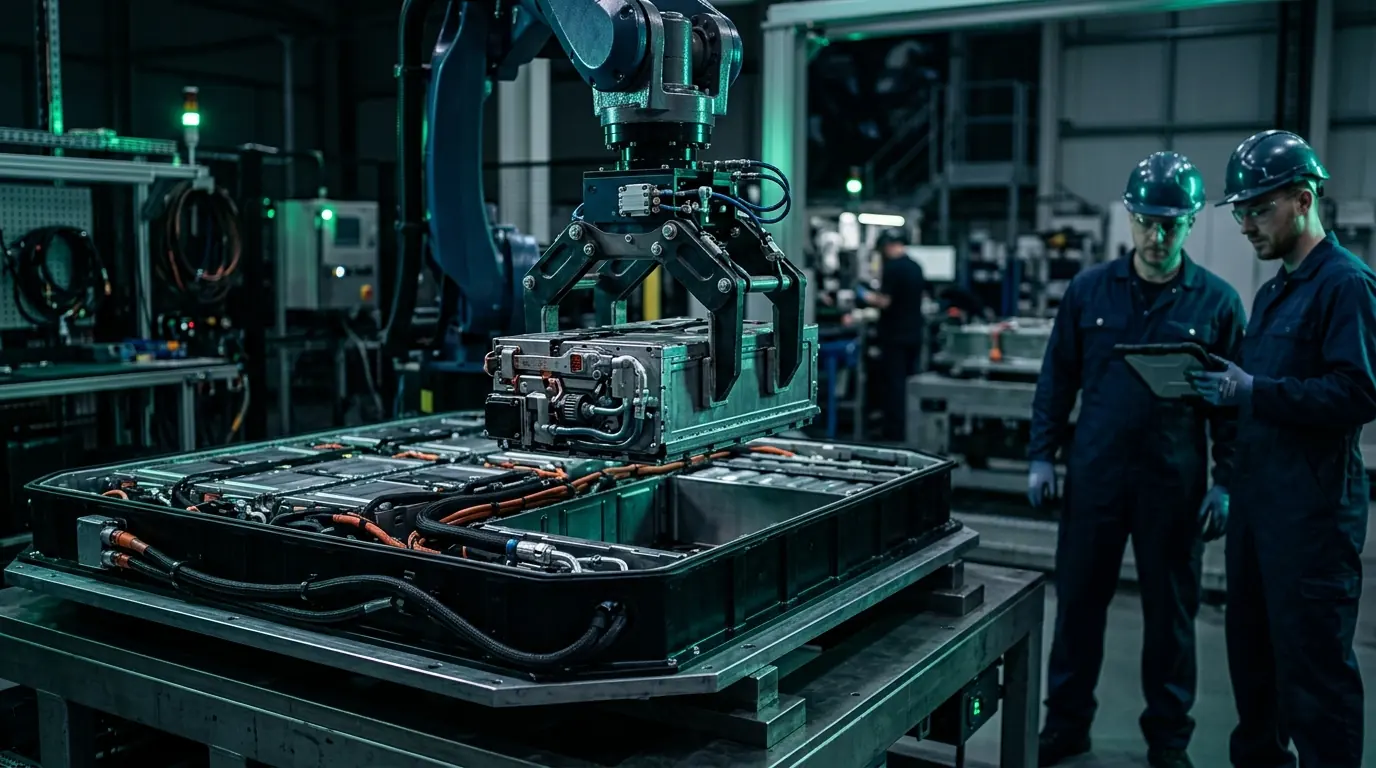
What the site does
Mandi Gobindgarh, near Ludhiana, is known for its steel and engineering industry and sits on Punjab's main industrial corridor. The second-life works opened in Focal Point Phase VI in 2023 to supply stationary storage to agriculture, small industry and telecom operators in north India, where unreliable grid supply creates steady demand for affordable backup. Diesel generator replacement is a common motivation for its customers.
With 7,500 TPA of capacity, the works builds systems from graded modules sent by northern grading sites such as Gurugram and Bhiwadi. Locating it in Punjab brings repurposed storage closer to customers in Punjab and Haryana, reducing delivery cost for heavy finished units and making on-site service easier. Each system ships with telemetry so its state of health can be tracked in service, and returned units come back to the works for refurbishment.
What arrives at the gate
Feedstock at Mandi Gobindgarh, Punjab reflects its catchment and plant type. Every consignment is weighed, photographed and logged against the originating manifest before it enters the process area.
- Grade A and B modules from northern grading sites
- Matched LFP modules
- Returned storage units
- Modules suited to low-cycle duties
The process, step by step
The 3 operating lines — module matching & restringing, bess container integration, grid commissioning test — run the sequence below.
| Stage | What happens |
|---|---|
| Module matching | Graded modules are grouped by capacity, impedance and thermal behaviour so strings age evenly. |
| Restringing & BMS retrofit | Matched modules are rebuilt into racks with a new battery management system, fusing and contactors. |
| Enclosure integration | Racks are installed in fire-rated containers with HVAC, aerosol suppression and gas detection. |
| Commissioning cycles | Full charge-discharge commissioning validates round-trip efficiency, SOC accuracy and protection trips. |
| Warranty registration | Each unit ships with a 5-year performance warranty and remote telemetry for state-of-health tracking. |
What sets the site apart
Northern storage builds. Second-life systems made close to customers in Punjab, Haryana and nearby states.
Agricultural applications. Systems sized for farm, cold-storage and small industrial loads.
Short supply route. Receives graded modules from Gurugram and Bhiwadi within a day's drive.
Where material goes next
Material that Mandi Gobindgarh, Punjab does not finish on site moves to the nearest specialist facility in the network, keeping transport distances and dwell times down.
| Facility | Role | Distance |
|---|---|---|
| NCR — Gurugram Collection & Grading Hub | Cell Grading & Diagnostics | 298 km |
| Kolkata — Haldia Refining Works | Hydrometallurgical Refinery | 1,564 km |
Field note