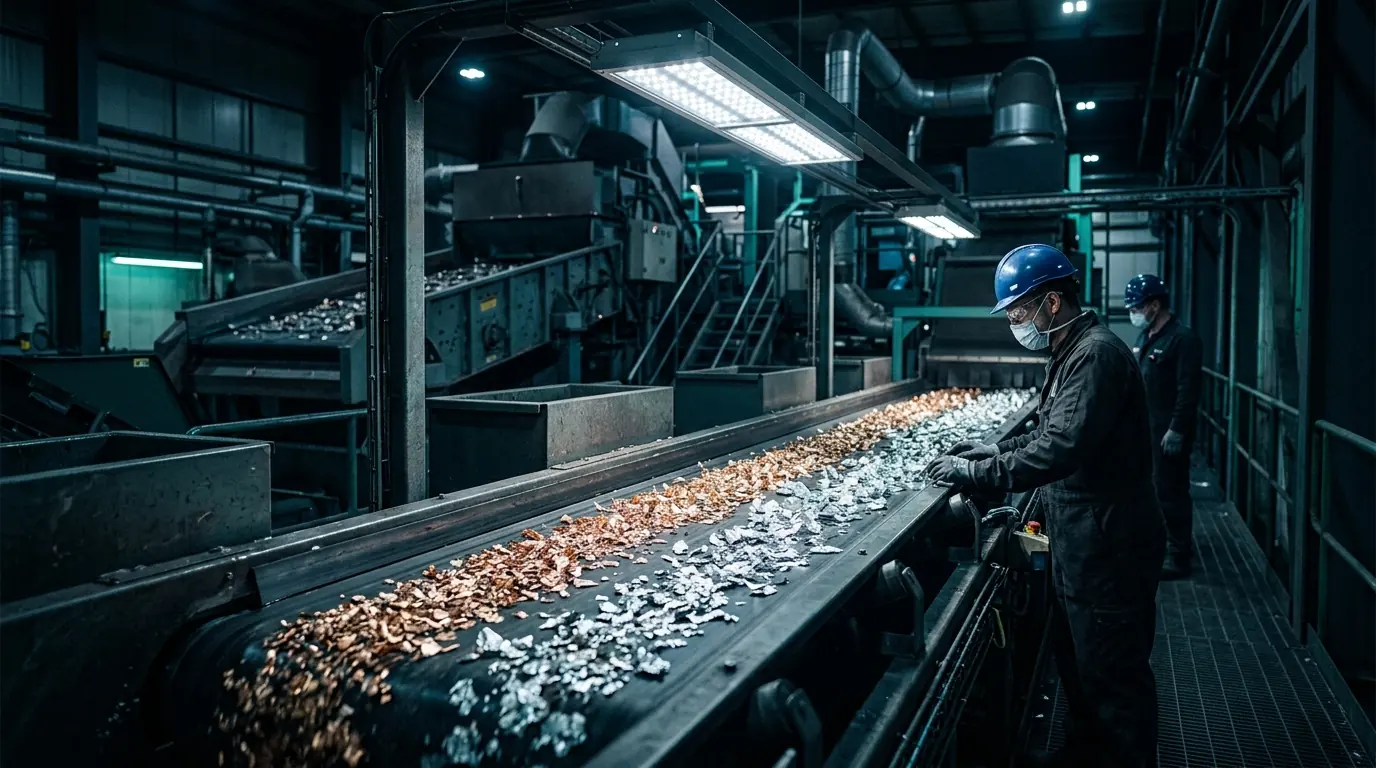
What the site does
Khordha, near Bhubaneswar, gives the network a collection point in Odisha, a state with rising electric two- and three-wheeler use and a large base of mining and metals industry. The yard opened in an IDCO industrial estate in 2024, making it one of the newest sites, to bring dispersed eastern volumes into a documented channel instead of leaving them with informal dismantlers.
With 6,500 TPA of capacity, the yard consolidates batteries from Odisha and neighbouring districts and forwards them to eastern refining and grading sites. Its role is logistical: gather small volumes safely, de-energise them, and assemble full loads that make the long journey to processing economically and legally sound. Most material is forwarded east to Haldia or south to grading sites, depending on chemistry and condition.
What arrives at the gate
Feedstock at Khordha, Odisha reflects its catchment and plant type. Every consignment is weighed, photographed and logged against the originating manifest before it enters the process area.
- Two- and three-wheeler batteries from Odisha
- Small fleet packs
- Industrial batteries from regional plants
- Aggregator loads
The process, step by step
The 3 operating lines — hazmat transport staging, pack de-energising, module sorting & consolidation — run the sequence below.
| Stage | What happens |
|---|---|
| Booking & manifest | Pickup is scheduled against an approved manifest listing chemistry, pack count, mass and damage status. |
| Packaging supply | UN 3480 / UN 3481 approved containers, vermiculite and Class 9 labelling are supplied free on registration. |
| Collection & transit | ADR-class vehicles with trained hazmat crews and GPS telemetry move consignments to the yard. |
| Weighbridge intake | Consignments are weighed, photographed and reconciled against the manifest within 24 hours of arrival. |
| De-energising & sorting | Packs are discharged to safe state of charge and sorted by chemistry and destination plant. |
| Onward dispatch | Sorted material is dispatched to the assigned grading or refining plant with a full chain-of-custody record. |
What sets the site apart
Newest eastern yard. Opened in 2024 to extend collection coverage across eastern India.
Regional consolidation. Combines small volumes into cost-effective full loads.
Route to Haldia. Well placed for onward movement towards the Haldia refining works.
Where material goes next
Material that Khordha, Odisha does not finish on site moves to the nearest specialist facility in the network, keeping transport distances and dwell times down.
| Facility | Role | Distance |
|---|---|---|
| Indore — Pithampur Grading Plant | Cell Grading & Diagnostics | 1,064 km |
| Nagpur — Butibori Second-Life Works | Second-Life BESS Works | 700 km |
| Kolkata — Haldia Refining Works | Hydrometallurgical Refinery | 331 km |
Field note