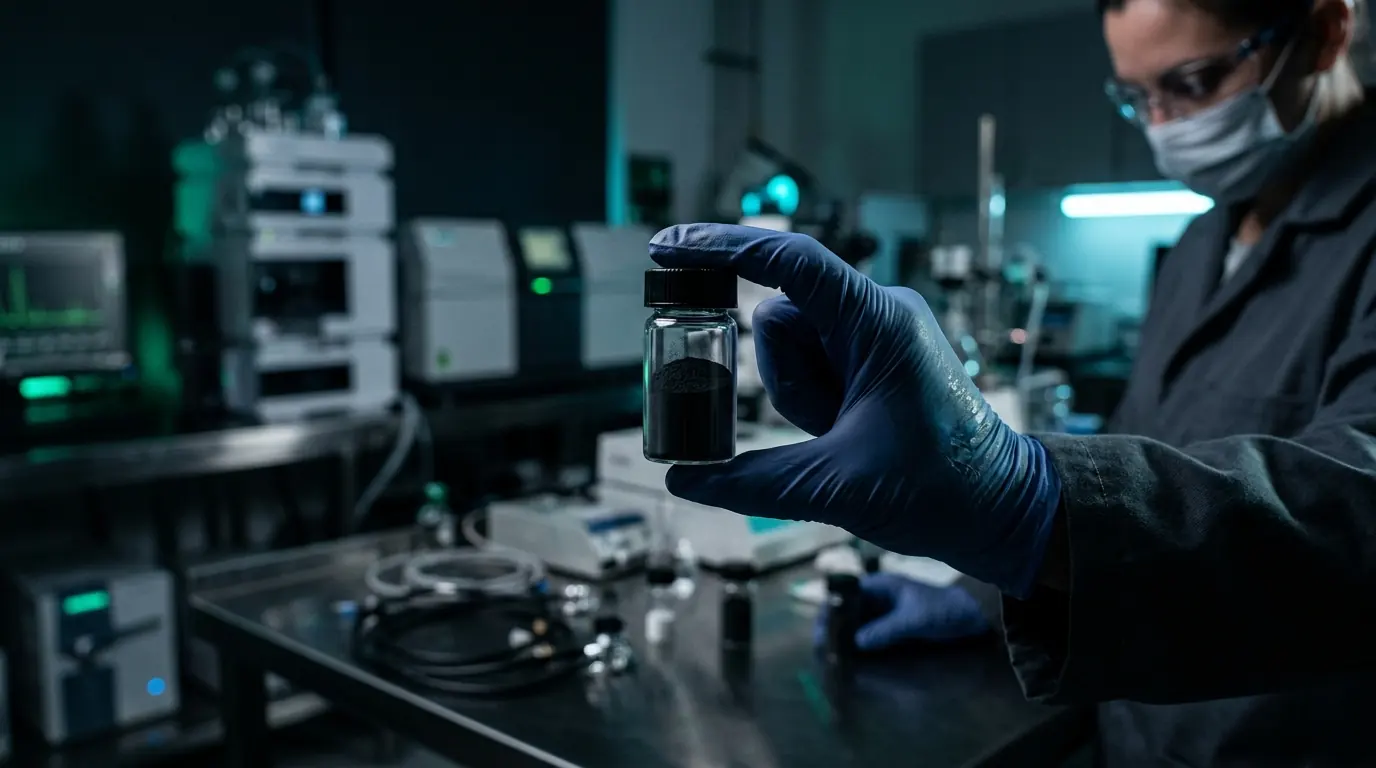
What the site does
The Lyon area is one of France's main chemical and industrial regions, with access to the Rhône corridor and routes to southern Europe. The refinery opened near Saint-Priest in 2020 to process black mass for French and southern European markets, in a region where chemical handling skills and infrastructure are already well established. It is one of three refineries in the network's European operations.
With 23,000 TPA of capacity, the refinery receives black mass from French and southern European sites and produces battery-grade salts. It supports France's growing battery manufacturing sector with locally refined material, and its location makes it a practical destination for black mass from Spain and Italy. Sampling and assay at intake set the basis for settlement, and every output batch ships with an analysis certificate and mass balance record for customers' reporting.
What arrives at the gate
Feedstock at Lyon, France reflects its catchment and plant type. Every consignment is weighed, photographed and logged against the originating manifest before it enters the process area.
- Black mass from French and southern European sites
- Cathode and electrode scrap
- Third-party black mass
- Material from Iberian and Italian shredders
The process, step by step
The 3 operating lines — black mass leaching, solvent extraction, battery-grade salt crystallisation — run the sequence below.
| Stage | What happens |
|---|---|
| Feed assay & sampling | Incoming black mass is homogenised and assayed by ICP-OES for Li, Ni, Co, Mn, Cu, Al and fluoride before it is released to leach. |
| Sulphuric acid leaching | Two-stage leach at 60–85 °C with peroxide reductant dissolves cathode metals at 96–99% extraction efficiency. |
| Impurity removal | Iron, aluminium and copper are precipitated and filtered; graphite is recovered as a separate low-ash cake. |
| Solvent extraction trains | Sequential Co, Ni and Mn circuits with counter-current mixer-settlers deliver individual metal raffinates. |
| Crystallisation & drying | Nickel and cobalt sulphate hexahydrate plus lithium carbonate are crystallised to 99.5%+ battery grade and bagged under nitrogen. |
| Batch certification | Every batch ships with a certificate of analysis, mass balance and chain-of-custody record for EPR and IRA reporting. |
What sets the site apart
Chemical-region location. Located in an established French chemical area.
Southern Europe access. Well placed for France, Spain and Italy.
Local supply for French industry. Supplies refined salts to regional battery manufacturers.
Where material goes next
Material that Lyon, France does not finish on site moves to the nearest specialist facility in the network, keeping transport distances and dwell times down.
| Facility | Role | Distance |
|---|---|---|
| Stuttgart — Baden-Wurttemberg Grading Works | Cell Grading & Diagnostics | 469 km |
| Zwickau — Saxony Second-Life Works | Second-Life BESS Works | 790 km |
Field note