From slogan to measurable claim
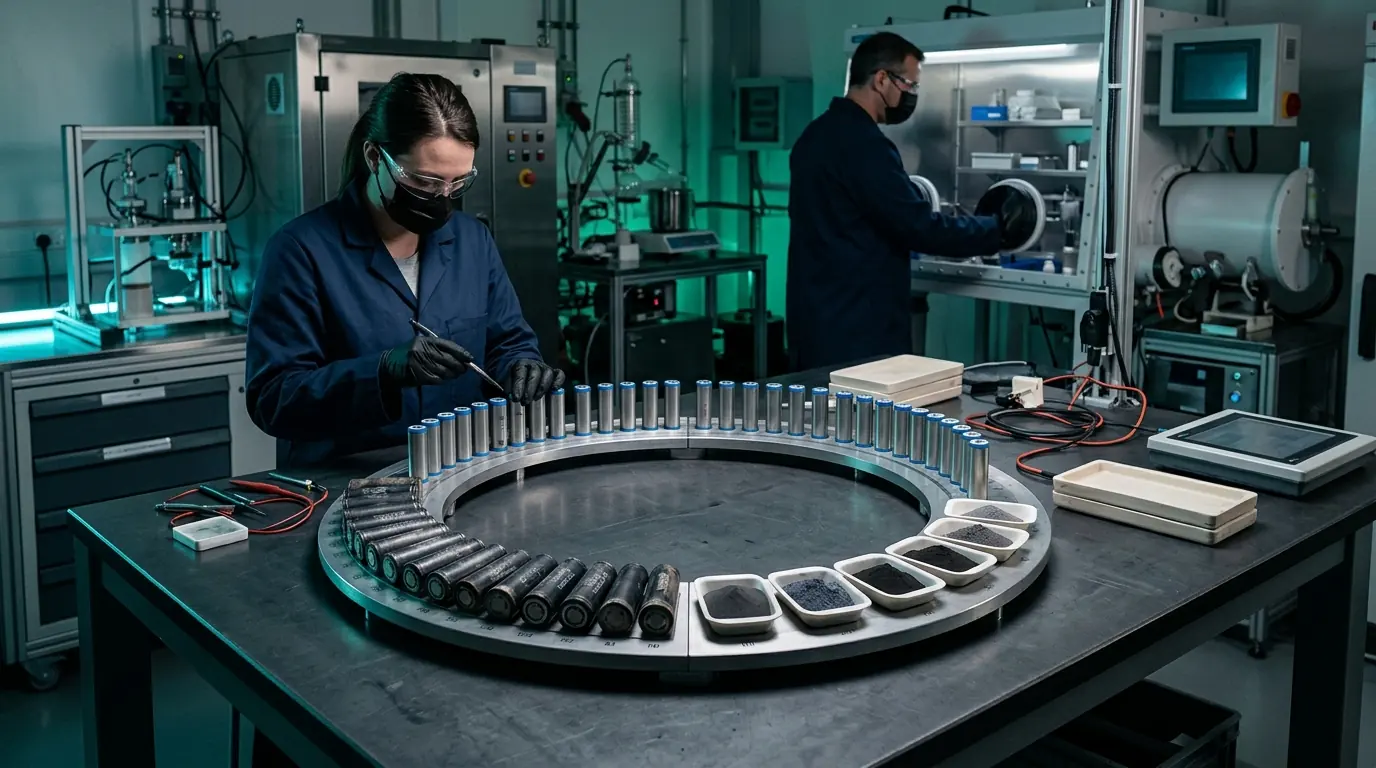
Many companies describe their battery programmes as circular, but the word covers a wide range of practice. A credible claim says how much material was collected, how much was reused, how much was recycled, which materials were recovered and at what rate, and where the output went. Without those figures, circularity is a description rather than a result.
Regulators and consumer protection authorities are paying closer attention to environmental claims. In the EU, rules on substantiating green claims are tightening, and companies can expect to be asked for evidence. Keeping mass balance and certificate records is the simplest way to be ready.
The order of value
A circular battery system keeps materials in use at the highest value for as long as possible. That usually means extending life in the vehicle first, then repurposing modules for stationary storage where their condition allows, and only then recycling the materials. Skipping straight to shredding loses the value of healthy modules.
Recycling still closes the loop. Recovered lithium, nickel, cobalt and copper can go back into new cells, reducing the need for newly mined material. The EU Battery Regulation sets minimum recycled content levels for new batteries in future phases, which gives that loop a regulatory backbone.
- Extend first life through maintenance and repair
- Repurpose modules that grade well for stationary use
- Recycle what cannot be reused, with measured recovery
- Return recovered materials to battery production
Reporting that holds up
Good circularity reporting states the boundary clearly: which batteries, which sites, which period. It separates reuse from recycling, reports recovery per material rather than as a single total, and discloses downstream processors. It avoids implying that all collected material was recycled when some was lost or sent to energy recovery.
External assurance adds credibility. An auditor can check mass balance, certificates and vendor records against the claims in a sustainability report. That level of scrutiny is becoming normal for larger companies and is worth preparing for even where it is not yet required.
Field note