NMC 811 Cylindrical 4680 recycling
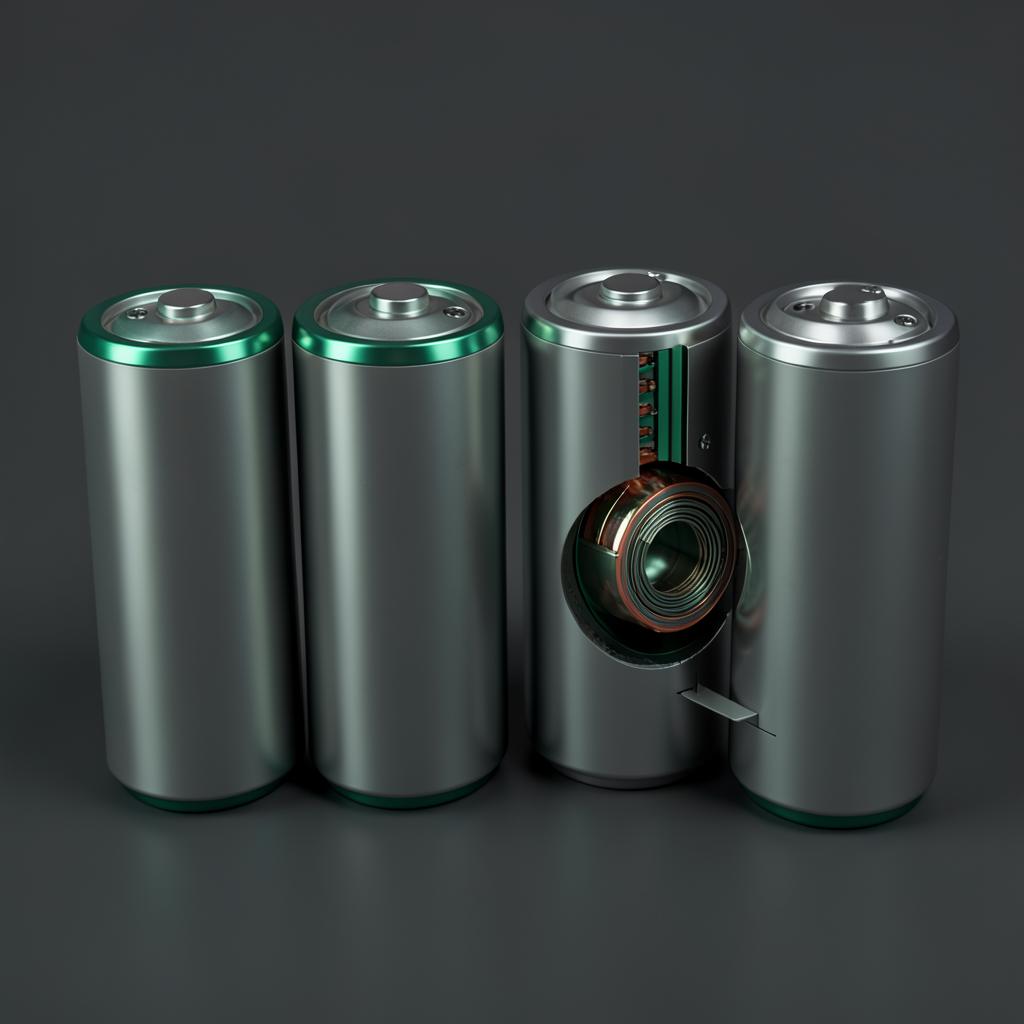
Structural tabless format requiring specialised disassembly cells. High nickel yields offset elevated processing cost.
Energy density
296 Wh/kg
Rated cycle life
1,800
Manufacturer nominal
Black mass value
6.8 $/kg
Per kg pack mass
Second-life value
66 $/kWh
At 100% SOH
What a tonne of black mass contains
| Element | kg / 100 kg | kg / tonne | Recovery |
|---|---|---|---|
| Lithium | 3.7 | 37 | 91% |
| Nickel | 23.9 | 239 | 98% |
| Cobalt | 2.4 | 24 | 98% |
| Manganese | 2.5 | 25 | 98% |
| Copper | 10.1 | 101 | 98% |
| Aluminium | 11.6 | 116 | 98% |
Encapsulation foam and adhesive add organic load to the shredded fraction, so pretreatment matters before black mass is released to leaching.
Reference case
How NMC 811 (4680) behaves at end of life
Ageing and fade
Fade mechanisms mirror other NMC 811 cells. The tabless design lowers internal resistance and heat generation, which can slow resistance growth relative to older cylindrical formats.
The knee point
Field data on end-of-life 4680 packs is still limited because the format is young. Grading therefore leans heavily on impedance measurement rather than assumptions from older fleets.
Thermal behaviour
4680 cells carry the same high-nickel chemistry as 2170s but in a larger can with more energy per cell, so a single failing cell releases more heat. Structural packs also make it harder to isolate an individual failing cell during handling.
Disassembly
Structural adhesive and foam encapsulation make disassembly slow. Specialised cutting and thermal debonding cells are used, and many packs move directly to discharge and shredding.
Where it works after the vehicle
Moderate — structural pack bonding limits module harvesting; cell-level grading required.
- Refining feed in most cases
- Cell-level second life where harvesting is practical
Limits
Packaging and transport
Structural packs are part of the vehicle body, so removal needs OEM procedure and lifting equipment rated for the full pack mass. Transport the pack whole rather than attempting field disassembly.
- Below 30% state of charge, recorded per serial
- Terminals capped, service disconnect removed
- UN-approved packaging with non-conductive cushioning
- Damage status declared before pickup
NMC 811 (4680) guides
EV models using NMC 811 (4680)
NMC 811 (4680): common questions
Is NMC 811 (4680) worth recycling?
Yes. At current settings a NMC 811 (4680) pack credits about USD 6.8 per kg as black mass, and grade A modules are worth around USD 66 per kWh in second life.
How does NMC 811 (4680) age?
Fade mechanisms mirror other NMC 811 cells. The tabless design lowers internal resistance and heat generation, which can slow resistance growth relative to older cylindrical formats. Field data on end-of-life 4680 packs is still limited because the format is young. Grading therefore leans heavily on impedance measurement rather than assumptions from older fleets.
Is NMC 811 (4680) safe to transport?
It moves as Class 9 dangerous goods under UN 3480 / UN 3481. Structural packs are part of the vehicle body, so removal needs OEM procedure and lifting equipment rated for the full pack mass. Transport the pack whole rather than attempting field disassembly.
Where does NMC 811 (4680) work in second life?
Moderate — structural pack bonding limits module harvesting; cell-level grading required. Typical applications: refining feed in most cases, cell-level second life where harvesting is practical.
Retiring NMC 811 (4680) packs?
Share pack counts and condition for a graded value split and a collection window within 48 hours.