NCA Pouch recycling
Premium nickel-cobalt pouch stacks with the highest recovery credit and the strictest safety handling class.
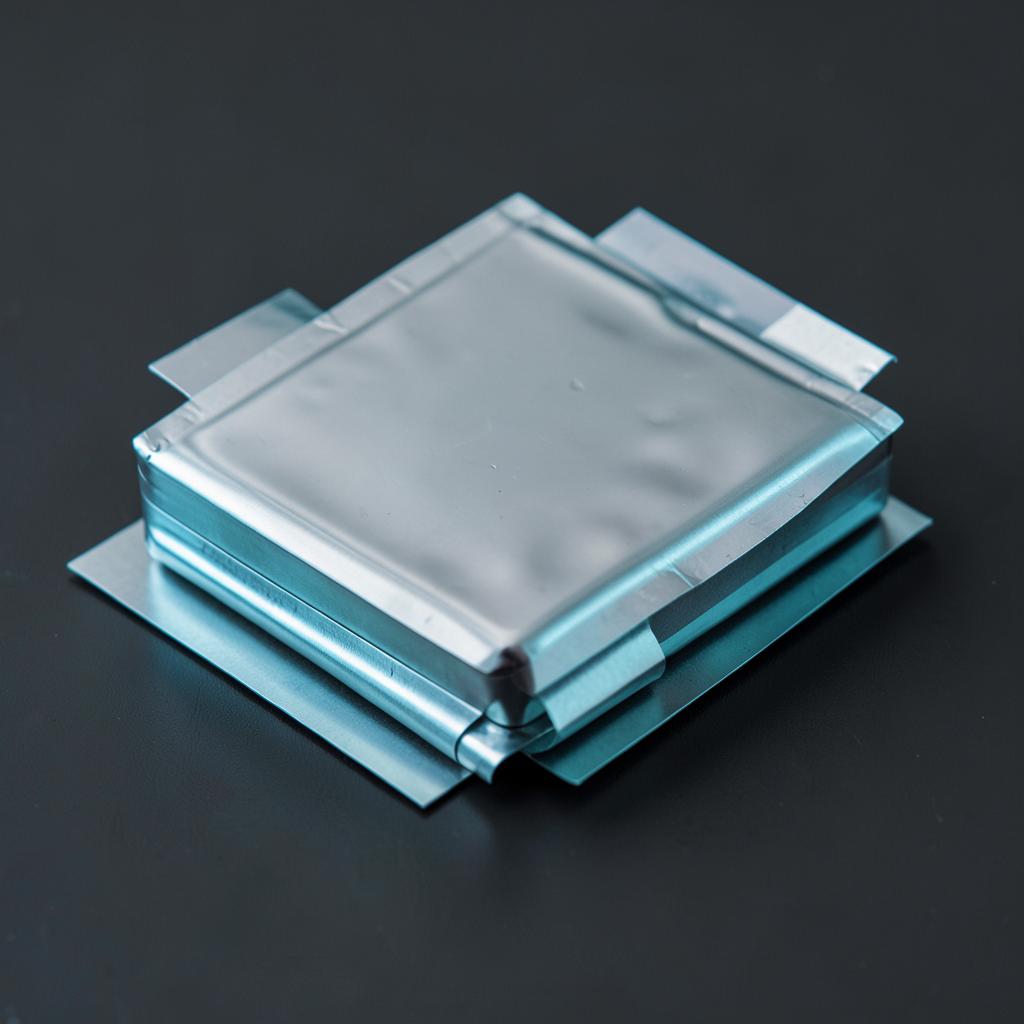
Energy density
272 Wh/kg
Rated cycle life
1,500
Manufacturer nominal
Black mass value
7.1 $/kg
Per kg pack mass
Second-life value
62 $/kWh
At 100% SOH
What a tonne of black mass contains
| Element | kg / 100 kg | kg / tonne | Recovery |
|---|---|---|---|
| Lithium | 3.4 | 34 | 91% |
| Nickel | 24.8 | 248 | 98% |
| Cobalt | 4.1 | 41 | 98% |
| Manganese | 0.4 | 4 | 98% |
| Copper | 12.9 | 129 | 98% |
| Aluminium | 8.2 | 82 | 98% |
NCA black mass is valuable for its nickel and cobalt, and the aluminium in the cathode is a known factor refiners account for during leaching and purification.
Reference case
How NCA Pouch behaves at end of life
Ageing and fade
NCA can deliver long life when it is kept in a moderate state-of-charge window, but it is sensitive to high voltage and heat. Swelling from gas generation is a common retirement signal in pouch formats.
The knee point
The knee can arrive abruptly in cells that have swelled or seen high temperatures, so any pouch stack with visible deformation is excluded from second life regardless of measured capacity.
Thermal behaviour
NCA shares the oxygen-release behaviour of high-nickel cathodes and is generally considered among the more reactive EV chemistries. Pouch cells have no rigid can, so mechanical damage and swelling translate quickly into safety risk.
Disassembly
Pouch stacks are laminated and often adhesive-bonded into modules. Harvesting is possible but slow, and the risk of puncturing a pouch means most stacks are discharged and shredded.
Where it works after the vehicle
Selective — only low-swell pouch stacks above 82% SOH are cleared for repurposing.
- Low-cycle backup only, under strict limits
- Refining feed for most packs
Limits
Packaging and transport
Treat every NCA pouch module as potentially damaged until inspected: individual containment for any swelled unit, non-conductive cushioning and no compression during transport.
- Below 30% state of charge, recorded per serial
- Terminals capped, service disconnect removed
- UN-approved packaging with non-conductive cushioning
- Damage status declared before pickup
NCA Pouch guides
EV models using NCA Pouch
NCA Pouch: common questions
Is NCA Pouch worth recycling?
Yes. At current settings a NCA Pouch pack credits about USD 7.1 per kg as black mass, and grade A modules are worth around USD 62 per kWh in second life.
How does NCA Pouch age?
NCA can deliver long life when it is kept in a moderate state-of-charge window, but it is sensitive to high voltage and heat. Swelling from gas generation is a common retirement signal in pouch formats. The knee can arrive abruptly in cells that have swelled or seen high temperatures, so any pouch stack with visible deformation is excluded from second life regardless of measured capacity.
Is NCA Pouch safe to transport?
It moves as Class 9 dangerous goods under UN 3480 / UN 3481. Treat every NCA pouch module as potentially damaged until inspected: individual containment for any swelled unit, non-conductive cushioning and no compression during transport.
Where does NCA Pouch work in second life?
Selective — only low-swell pouch stacks above 82% SOH are cleared for repurposing. Typical applications: low-cycle backup only, under strict limits, refining feed for most packs.
Retiring NCA Pouch packs?
Share pack counts and condition for a graded value split and a collection window within 48 hours.