The rules that apply in United States
The US has no federal extended producer responsibility law for EV batteries. Lithium-ion batteries can be managed under EPA's universal waste rules, transport follows DOT PHMSA hazardous materials regulations, and states such as California and New Jersey are moving towards producer responsibility for EV batteries. Recycled material processed in North America can also count towards IRA critical mineral requirements.
End-of-life volume comes from early Tesla, Nissan and GM fleets, plus large production scrap from gigafactories across the Midwest and South.
What producers and holders must do
Producer responsibility follows whoever placed the battery on the market, but the practical burden often lands on the fleet or workshop holding the retired asset.
- Manage retired batteries under universal waste or state hazardous waste rules
- Package, mark and document shipments under 49 CFR hazardous materials rules
- Track state-specific EV battery take-back and reporting requirements
- Keep chain-of-custody evidence to support IRA critical mineral sourcing claims
Local permitting around Reno, Nevada
The refinery is permitted through the Nevada Division of Environmental Protection, with conditions on air emissions, water use and hazardous materials. Inbound feed is managed under the applicable US EPA hazardous or universal waste rules, and shipments follow US DOT hazardous materials regulations.
The document set
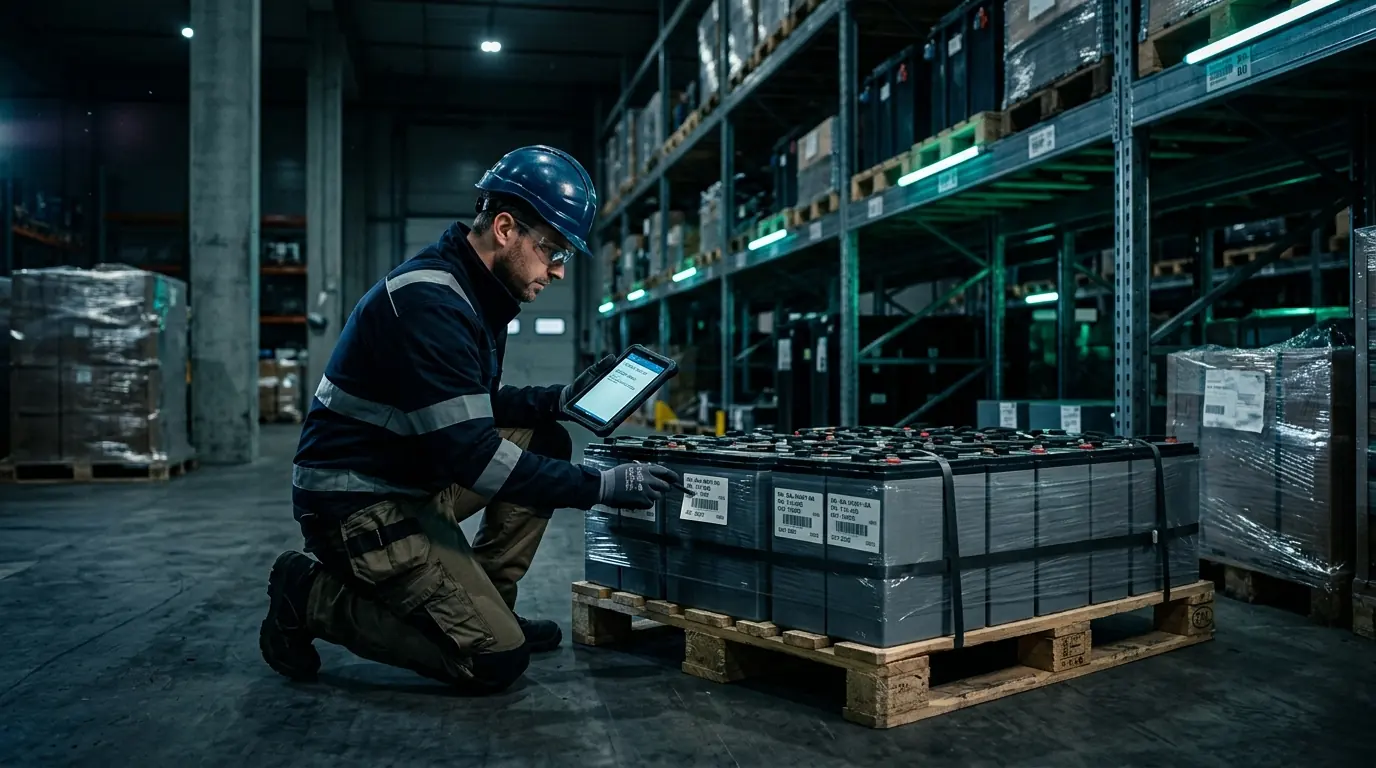
Shipments follow DOT PHMSA 49 CFR requirements, with damaged or defective batteries under stricter special permits and packaging. Each consignment carries a dangerous goods declaration, a transporter authorisation, a weighbridge record and a chain-of-custody sheet.
| Document | When | Purpose |
|---|---|---|
| Dangerous goods declaration | Before pickup | UN 3480 / UN 3481 classification and damage status |
| Chain-of-custody sheet | At handover | Links serials to transporter and destination |
| Weighbridge record | At gate-in | Verified mass for certificates and settlement |
| Recovery certificate | After processing | Quantity, recovery per metal and downstream vendors |
Booking a collection in the Reno, Nevada catchment
These site-specific notes help collections run on time.
- Only black mass and cell or cathode scrap are accepted at this site.
- Bulk bags must be sealed, labelled and accompanied by chemistry declarations.
- Deliveries are booked into fixed dock windows at the industrial centre.
- Settlement follows sampling and assay at intake, with results shared with the consignor.