Tata Motors Starbus EV 12m battery recycling in Unnao, Uttar Pradesh
Lucknow — Unnao Collection Yard takes whole Tata Motors Starbus EV 12m packs straight from fleets, dealers and workshops. Packs are weighed, de-energised and logged here before modules move on for grading or refining.
Pack value at 80% SOH
8,007 USD
Hybrid Split
Second-life share
56%
At 80% SOH
Site capacity
8,000 TPA
Reverse Logistics Yard
Cities served
0
From Unnao, Uttar Pradesh
Where a Tata Motors Starbus EV 12m pack goes from Unnao, Uttar Pradesh
- 1
Intake at Unnao, Uttar Pradesh
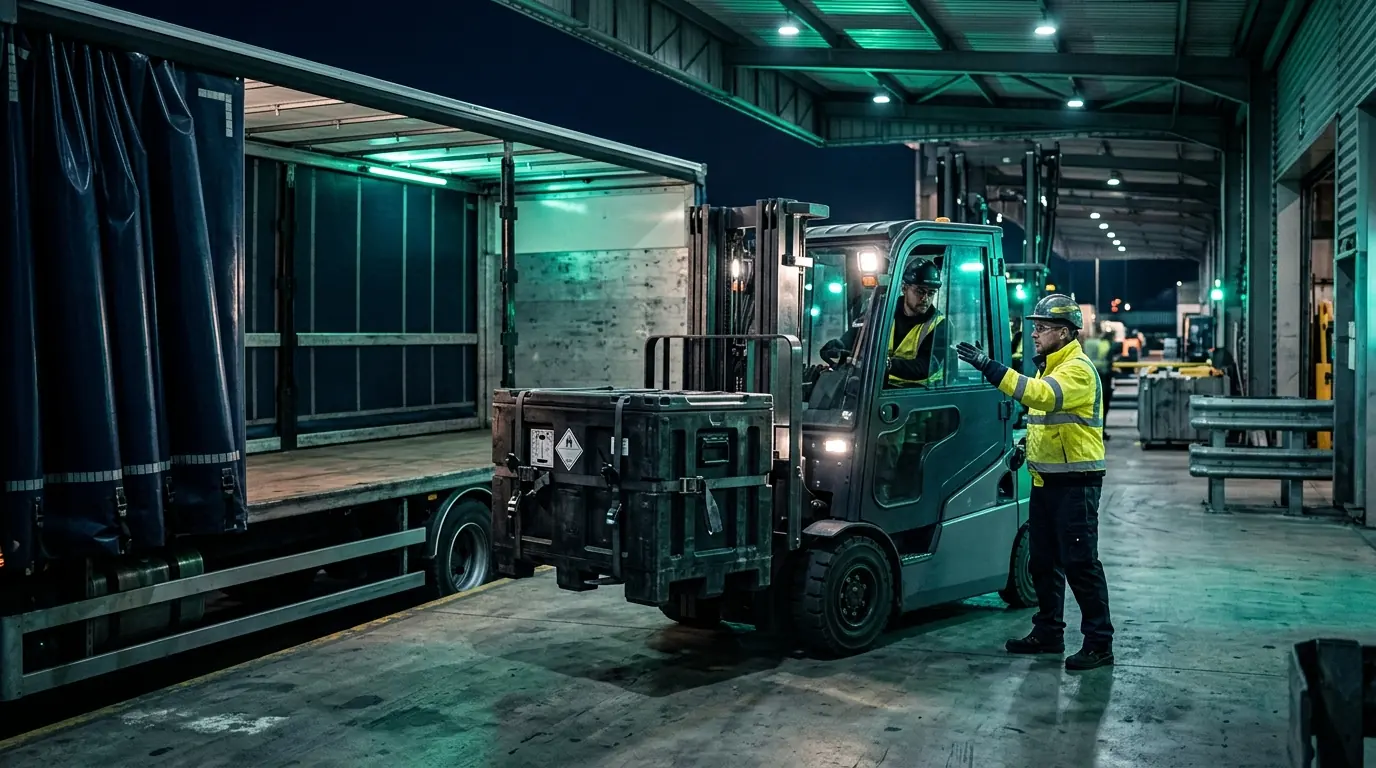
Packs travel as individual heavy crates on flatbed or curtain-side trailers with load restraint rated for the mass. Each pack is weighed, photographed and discharged below 30% state of charge.
- 2
Graded at Gurugram, Haryana
Modules travel 400 km to NCR — Gurugram Collection & Grading Hub for capacity, resistance and impedance testing across all 20 modules.
- 3
Second life at Butibori, Maharashtra
At 80% SOH about 56% of the pack qualifies for reuse and goes to Nagpur — Butibori Second-Life Works (644 km). Excellent — long calendar life makes LFP the preferred feedstock for stationary BESS repurposing.
- 4
Refined at Haldia, West Bengal
Remaining modules are shredded to black mass and refined at Kolkata — Haldia Refining Works, 918 km away.
| Stage | Facility | Distance |
|---|---|---|
| Nearest grading bench | NCR — Gurugram Collection & Grading Hub | 400 km |
| Nearest second-life works | Nagpur — Butibori Second-Life Works | 644 km |
| Nearest refinery | Kolkata — Haldia Refining Works | 918 km |
Inside the Tata Motors Starbus EV 12m battery
The Tata Motors Starbus EV 12m (2021) carries a 250 kWh LFP Prismatic (LiFePO4) pack with 20 modules at 600 V, weighing roughly 1850 kg. Cobalt-free prismatic chemistry dominant in Indian passenger EVs and commercial fleets. Low black mass value, exceptional second-life economics.
| Service year | SOH | Grade | Value |
|---|---|---|---|
| Year 2 | 96.3% | A — BESS ready | USD 13,128 |
| Year 4 | 93.2% | A — BESS ready | USD 12,714 |
| Year 6 | 90.1% | A — BESS ready | USD 12,301 |
| Year 8 | 87% | A — BESS ready | USD 11,887 |
| Year 10 | 83.9% | B — Second life | USD 10,195 |
What the chemistry means here
How it ages
LFP fades slowly and fairly linearly for most of its life. Capacity loss is driven mainly by lithium inventory being locked up in the SEI layer on the graphite anode, while the cathode structure stays largely intact.
Thermal behaviour
LFP's olivine cathode holds its oxygen tightly, so thermal runaway typically starts at higher temperatures than nickel-rich cells and releases noticeably less heat. It is not inert: a failing LFP cell still vents flammable electrolyte vapour and hydrogen, and large prismatic cans store a lot of energy in one place.
Handling LFP Prismatic
Collecting a Tata Motors Starbus EV 12m pack
250 kWh, 20 modules, about 1850 kg — this is how the Unnao, Uttar Pradesh team plans the job.
Removal
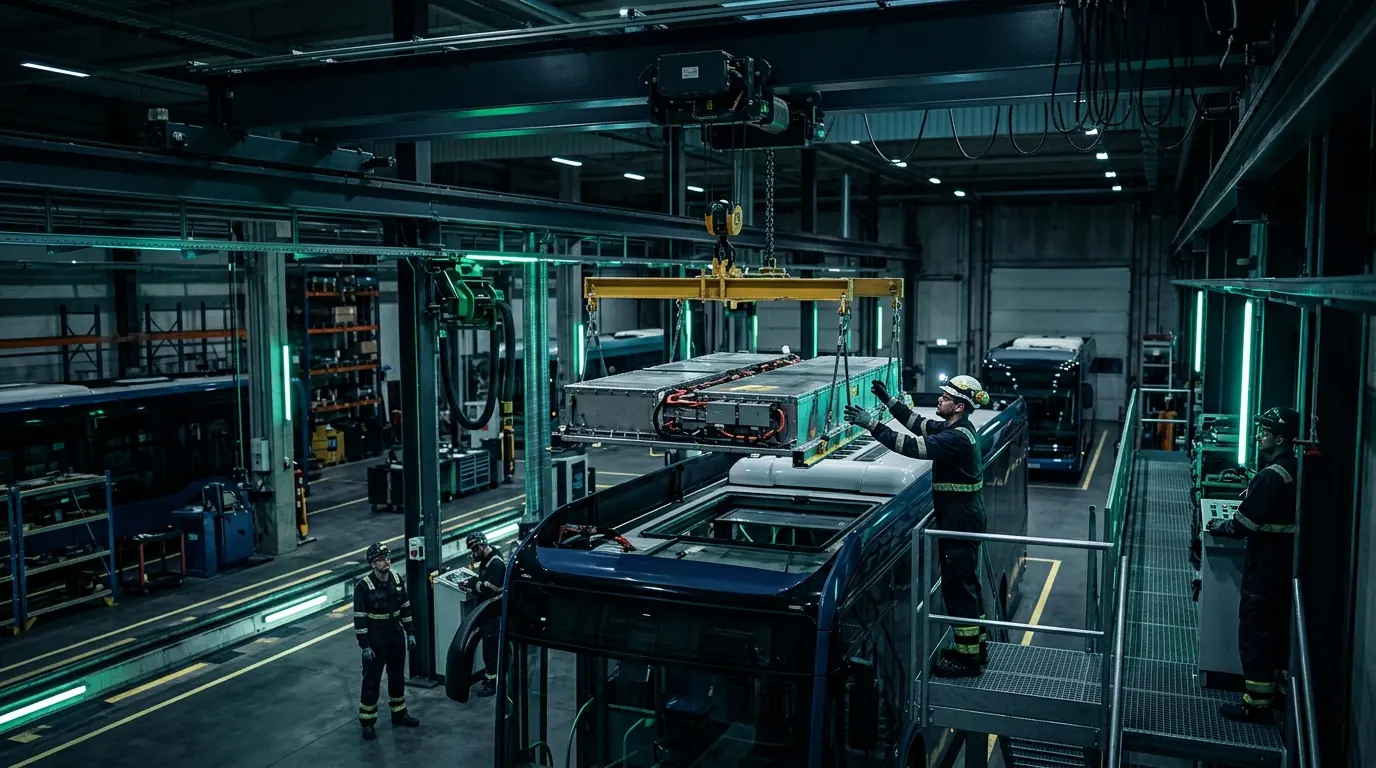
Roof- or floor-mounted packs are lifted by crane or gantry with the OEM lifting frame, one string at a time.
Packaging
Packs travel as individual heavy crates on flatbed or curtain-side trailers with load restraint rated for the mass.
Consolidation
Bus packs are collected per depot and per retirement window, usually a full trailer per visit.
Before the truck arrives
- Confirm crane or gantry access and lifting frame availability
- Isolate each pack string and record its voltage
- Share pack-string serials against the bus fleet number
- Plan collection around depot operating hours
Unnao, Uttar Pradesh site notes
- Small loads are accepted but grouped into scheduled consolidated runs to keep costs down.
- Aggregators should list unit counts and battery types for each delivery.
- Strap e-rickshaw batteries together and protect terminals before loading.
- Any battery with swelling or electrolyte leakage must be declared and is kept apart on arrival.
What this pack yields
lithium
18.54 kg
nickel
0 kg
cobalt
0 kg
manganese
0 kg
copper
56.08 kg
aluminium
66.93 kg
Refining-route estimate at 80% SOH. Measured module health on the bench sets the final split.
Rules in India
Battery Waste Management Rules 2022 (BWMR)
Regulator: Central Pollution Control Board (CPCB) and State Pollution Control Boards
The yard operates under Uttar Pradesh Pollution Control Board consent in a UPSIDA industrial area. It supports producers' obligations under the Battery Waste Management Rules 2022 by recording custody for every unit it receives, which the downstream recycler uses when generating EPR evidence.
Tata Motors Starbus EV 12m in Unnao, Uttar Pradesh: common questions
Can I drop off a Tata Motors Starbus EV 12m battery at Unnao, Uttar Pradesh?
Yes, by appointment. Lucknow — Unnao Collection Yard accepts whole Tata Motors Starbus EV 12m packs; book a collection or a drop-off slot so the site can prepare packaging and paperwork.
What happens to Tata Motors Starbus EV 12m modules after Unnao, Uttar Pradesh?
Intake at Unnao, Uttar Pradesh, then Graded at Gurugram, Haryana, then Second life at Butibori, Maharashtra, then Refined at Haldia, West Bengal. At 80% SOH roughly 56% of the pack goes to second life and the rest is refined.
How should a Tata Motors Starbus EV 12m pack be prepared for pickup?
Confirm crane or gantry access and lifting frame availability. Isolate each pack string and record its voltage. Share pack-string serials against the bus fleet number. Plan collection around depot operating hours.
Which rules apply to Tata Motors Starbus EV 12m recycling in India?
Battery Waste Management Rules 2022 (BWMR), overseen by Central Pollution Control Board (CPCB) and State Pollution Control Boards. Retired packs move as hazardous goods by road under central motor vehicle rules, and export needs Basel-compliant permissions.
Tata Motors Starbus EV 12m at other sites
Other bus packs at Unnao, Uttar Pradesh
Retiring Tata Motors Starbus EV 12m packs near Unnao, Uttar Pradesh?
Share pack counts and condition. The despatch desk confirms a collection window within one working day and sends the right packaging.